A quick guide for clinicians who aren’t specialists in trans care: GPs, practice nurses, pharmacists, gynaecologists, emergency doctors, ward nurses and anaesthetists. Most of a trans person’s healthcare happens outside a gender clinic. This guide is for those encounters.
Draft 0.17 · 30 October 2026 · not for clinical use. This guide is under specialist clinical review. Clauses marked ⧗ are waiting for a named specialist’s sign-off. We are asking clinicians for feedback before version 1.0: write to [email protected].
Downloads
- Print draft · A4 · 4 pages
Caring for trans and gender-diverse patients: print sheets (PDF) — two companion sheets, printed front and back: Sheet 1 · In clinic and Sheet 2 · In the ED / on the ward. Draft 0.7. - Decision cards · A4 · 11 cards
Caring for trans and gender-diverse patients: decision cards (PDF) — flowcharts and quick tables: which drug to hold; clot, heart attack or stroke; surgery and anaesthesia; reading a blood result; high haematocrit; ran out of hormones; testing the organs present; pelvic pain or bleeding; after genital surgery; headache or seizure; contraception. Draft 0.7. - Full guide · A4 · 36 pages
Caring for trans and gender-diverse patients: full referenced text (PDF) — the complete guide with all references, in Eden Openly’s publication format. Draft 0.17, not yet deposited.
Decision cards (flowcharts)
Tap a card to see it full size. Each card is also in the decision cards PDF above.
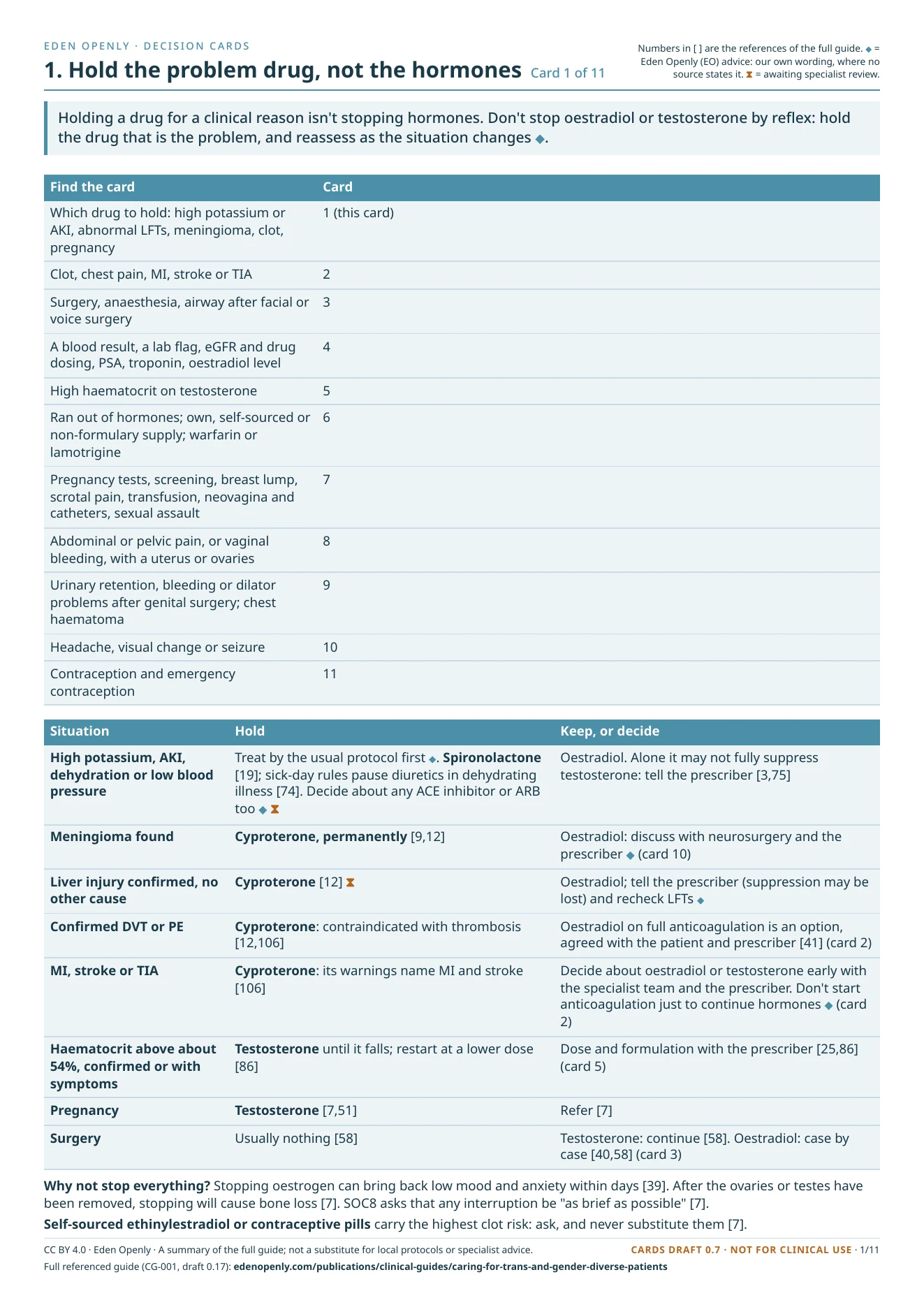 1. Hold the problem drug
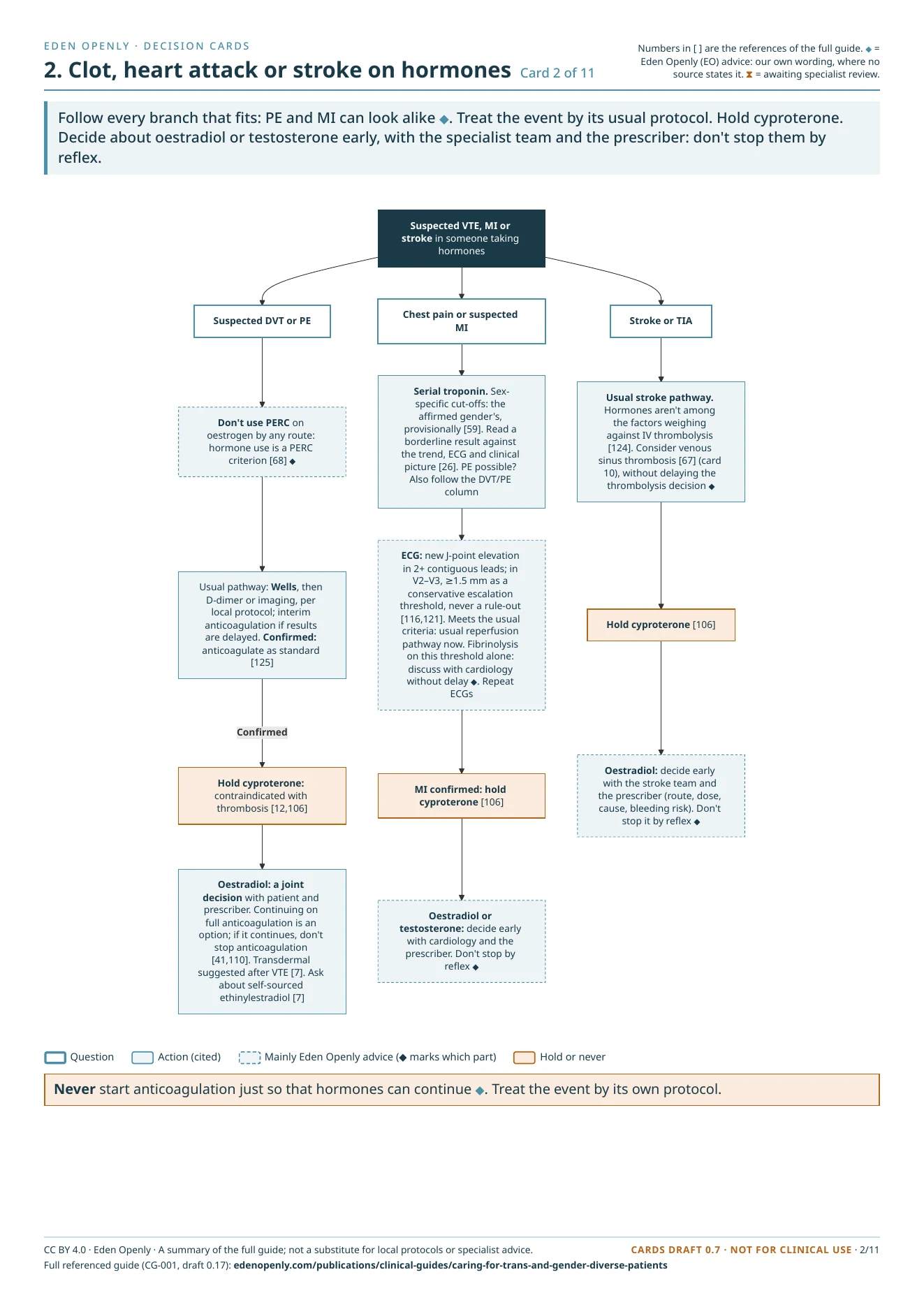 2. Clot, heart attack or stroke
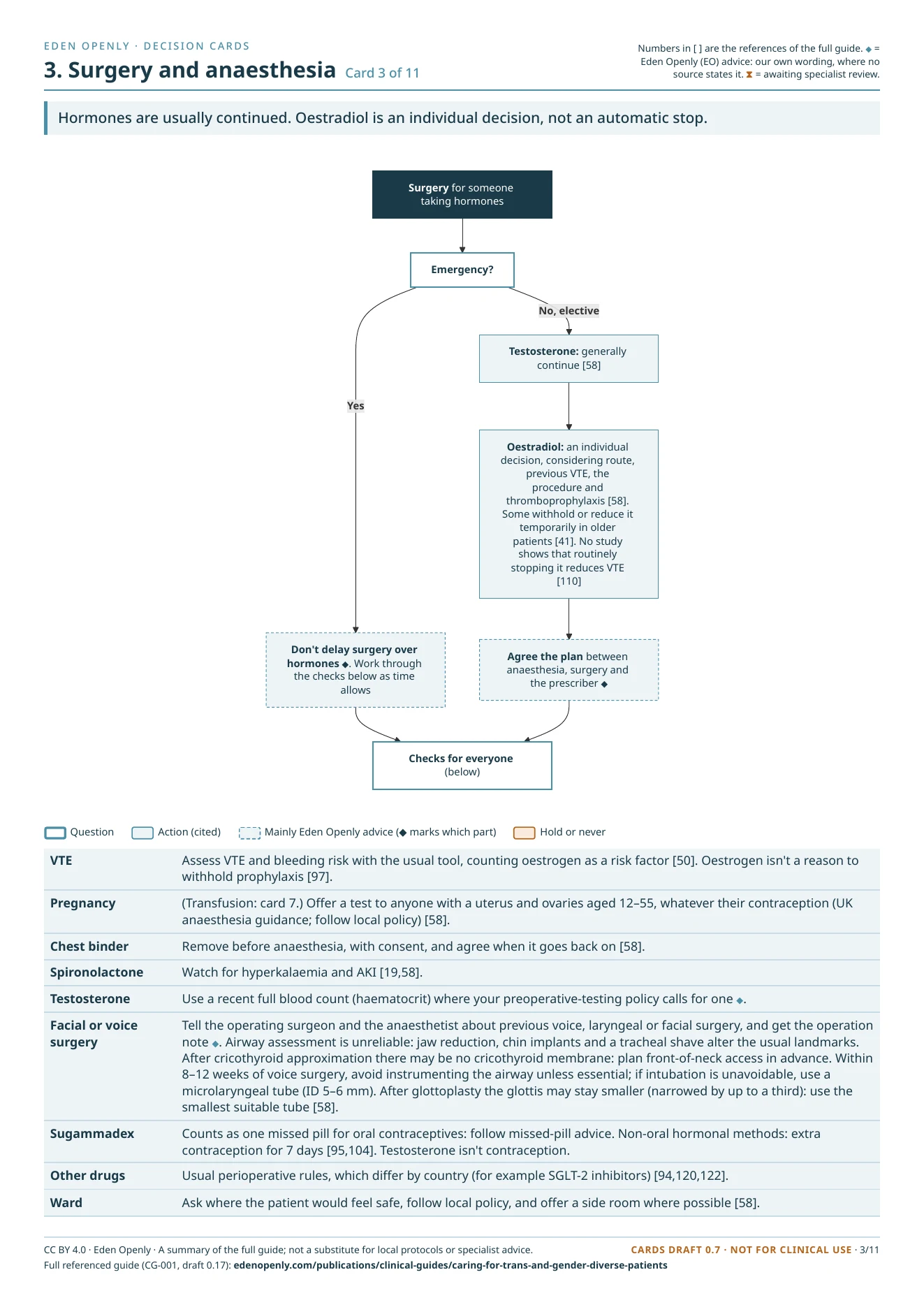 3. Surgery and anaesthesia
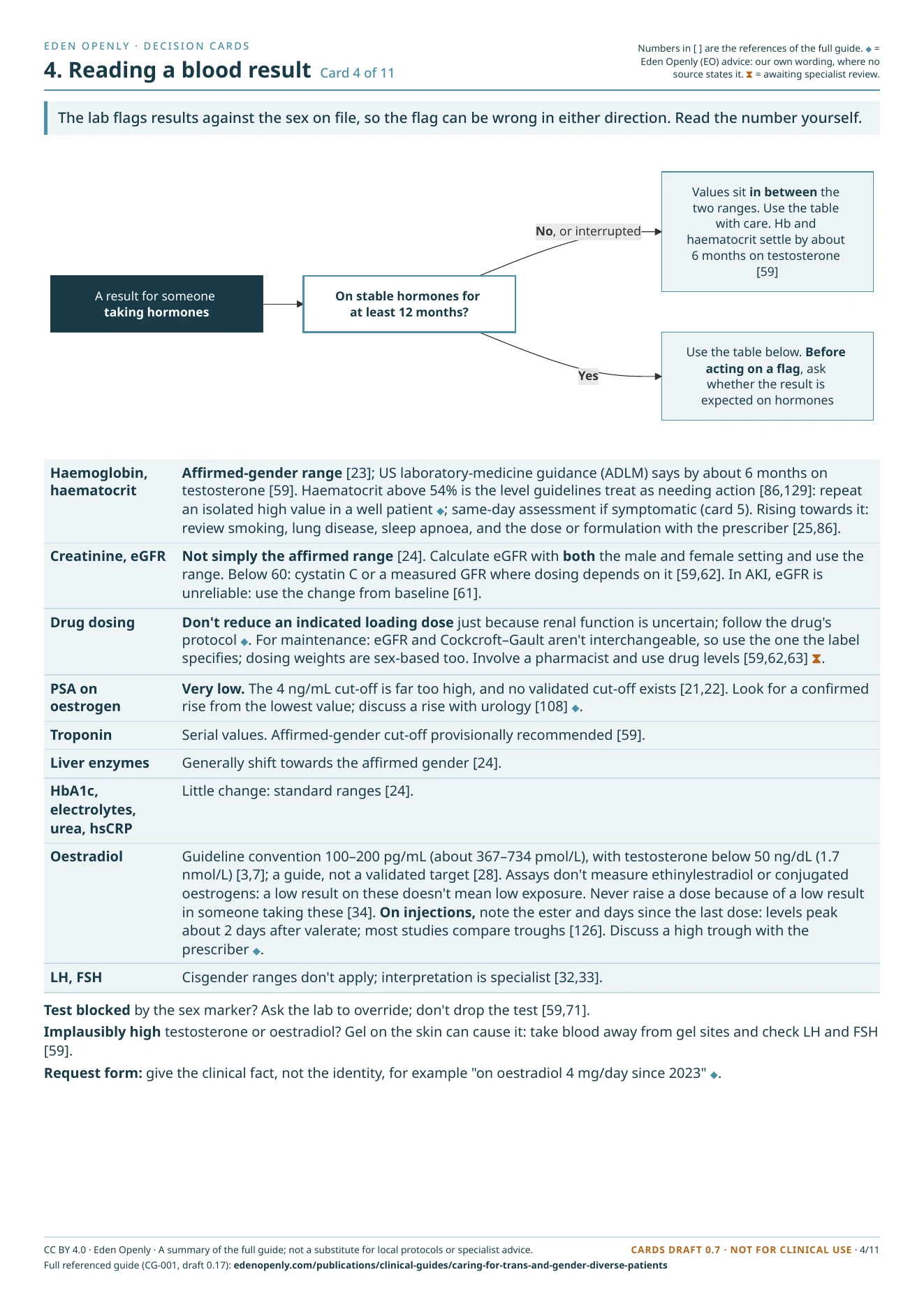 4. Reading a blood result
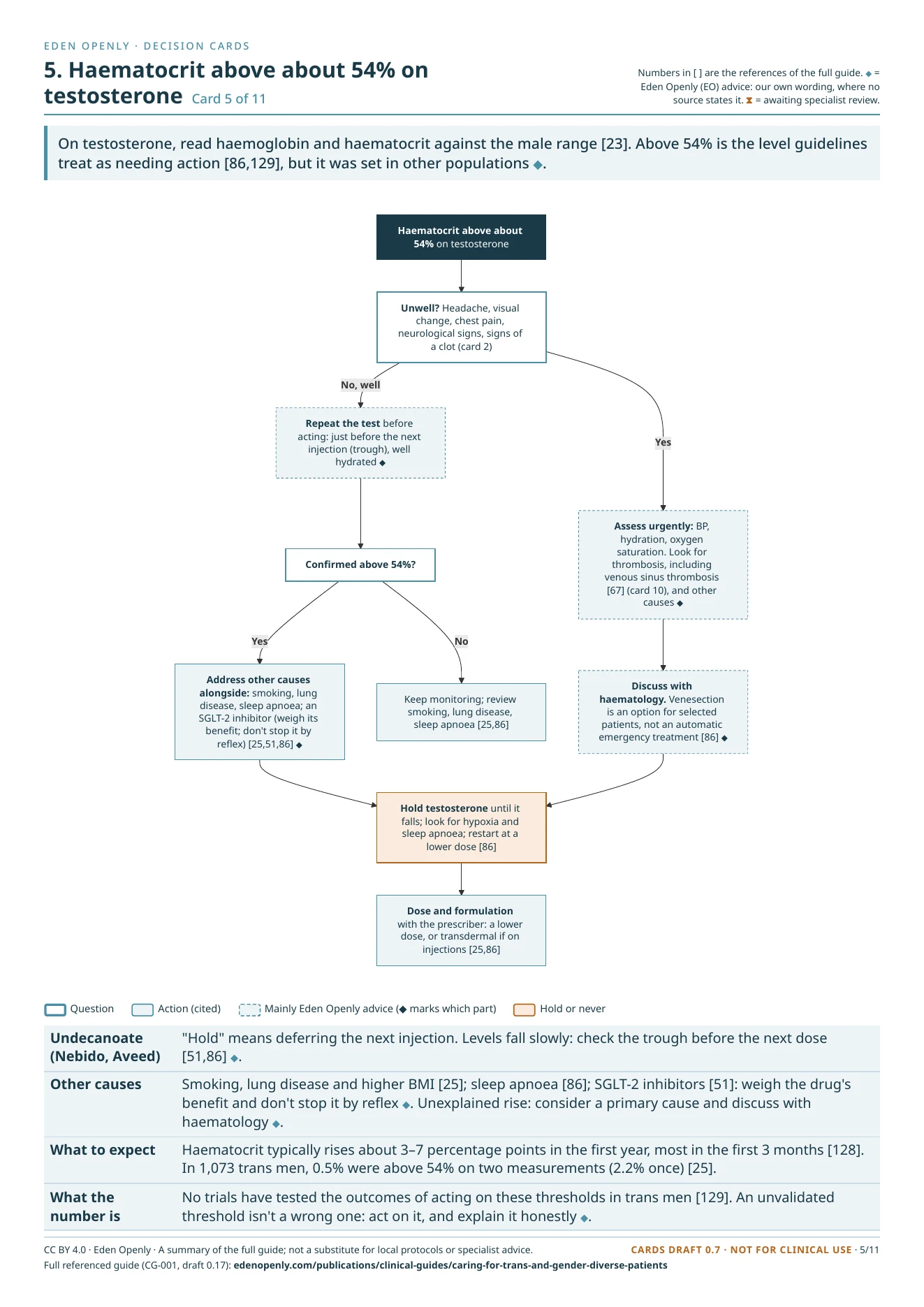 5. Haematocrit above 54%
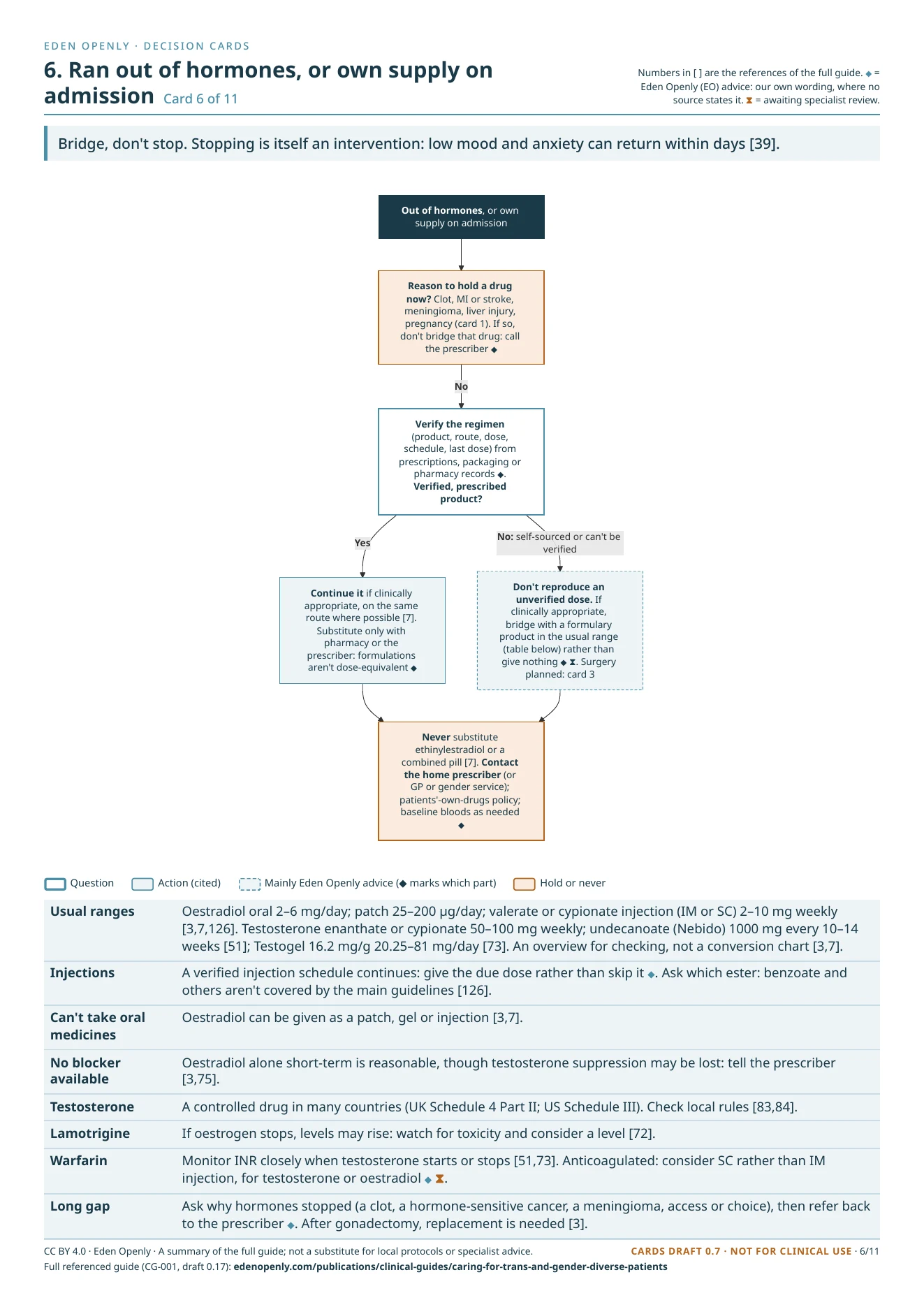 6. Ran out of hormones
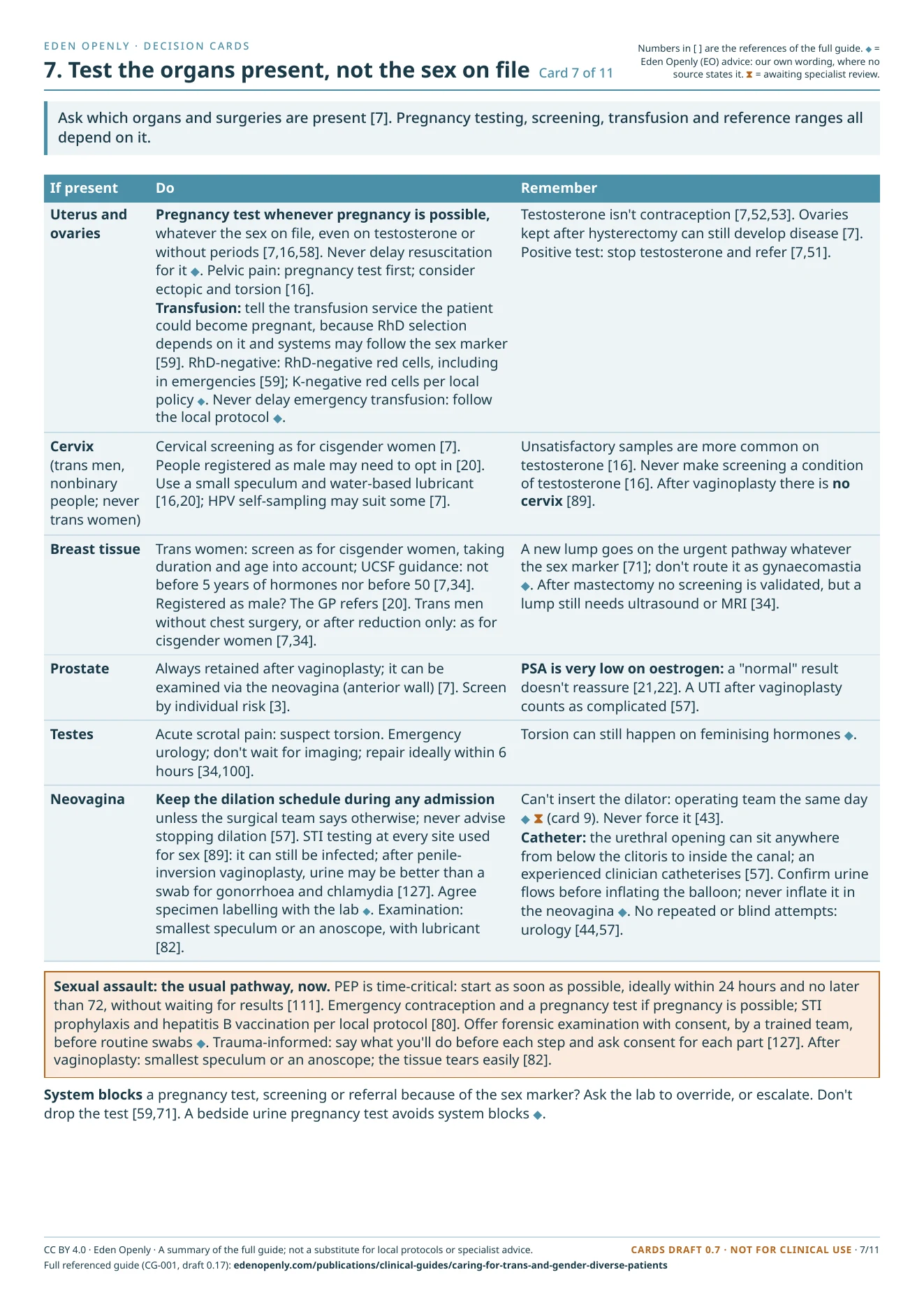 7. Organs present
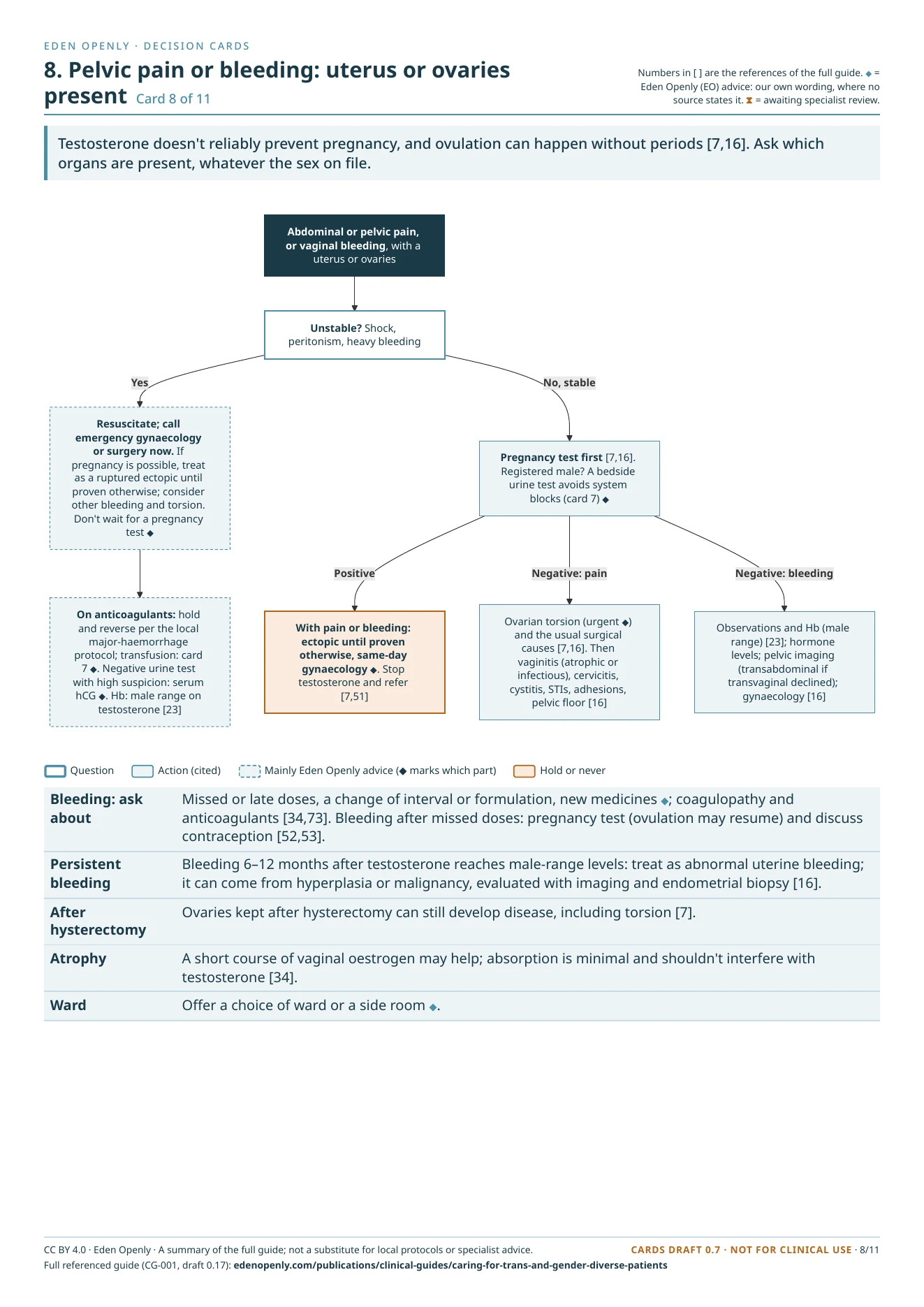 8. Pelvic pain or bleeding
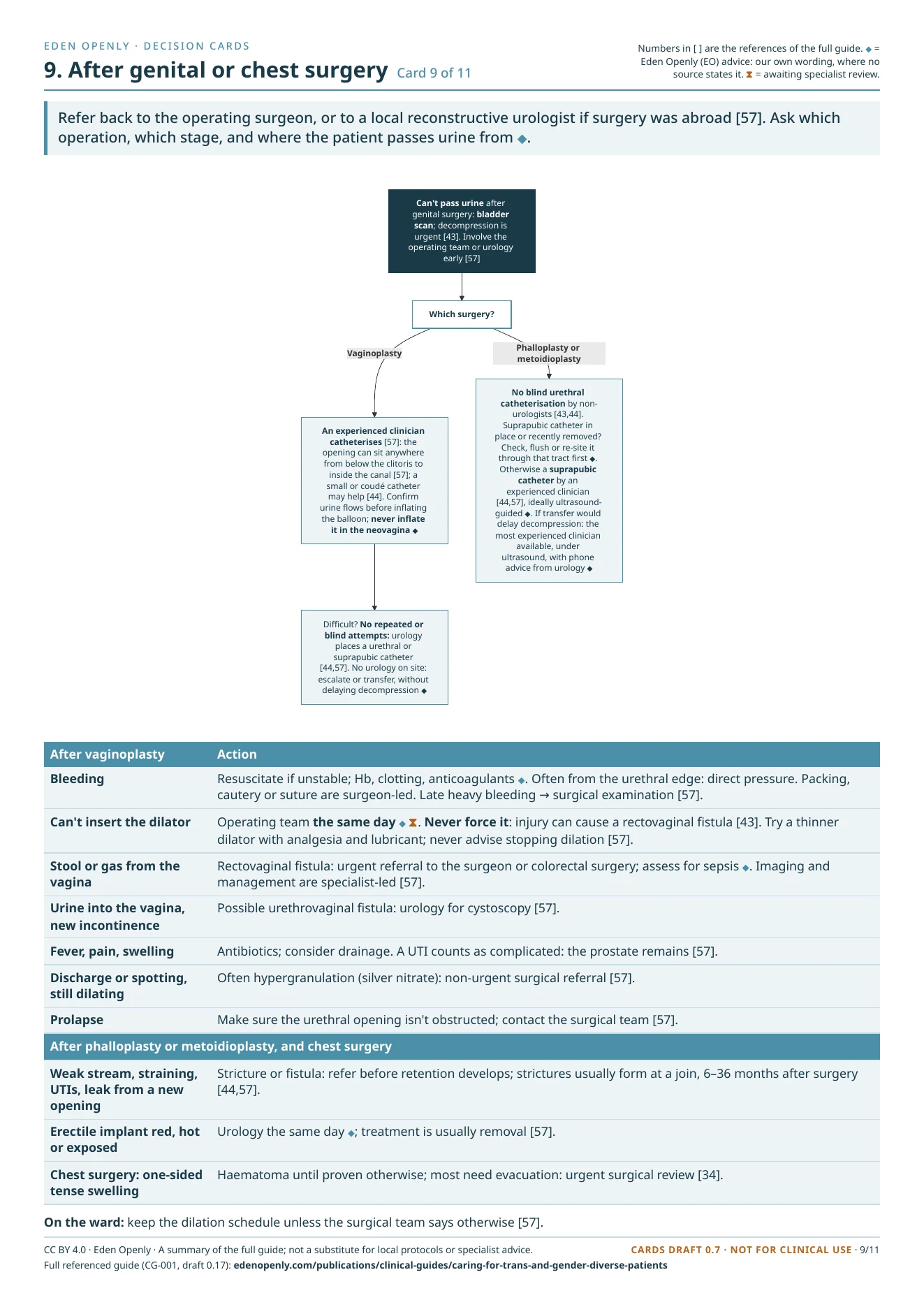 9. After genital or chest surgery
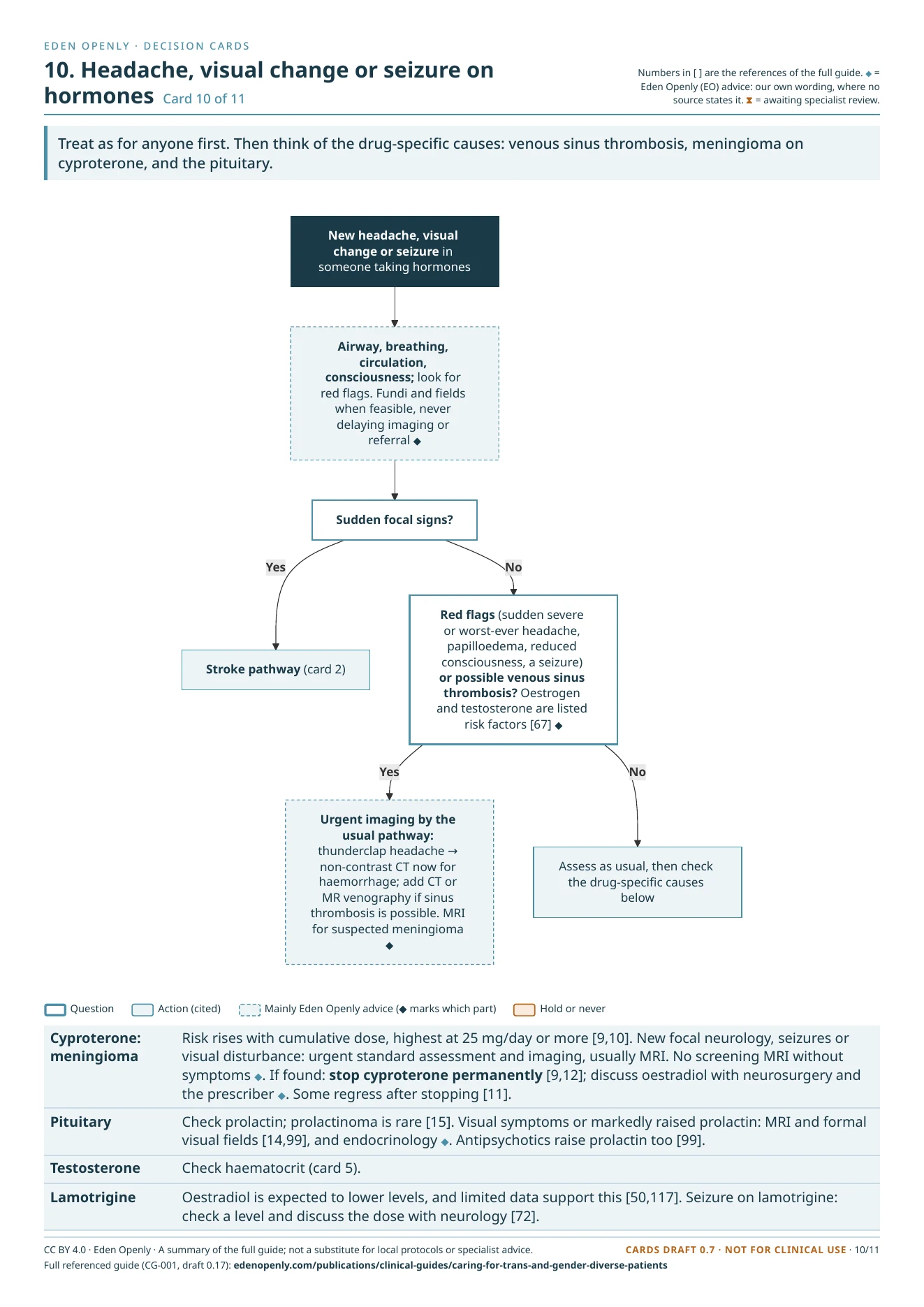 10. Headache, visual change or seizure
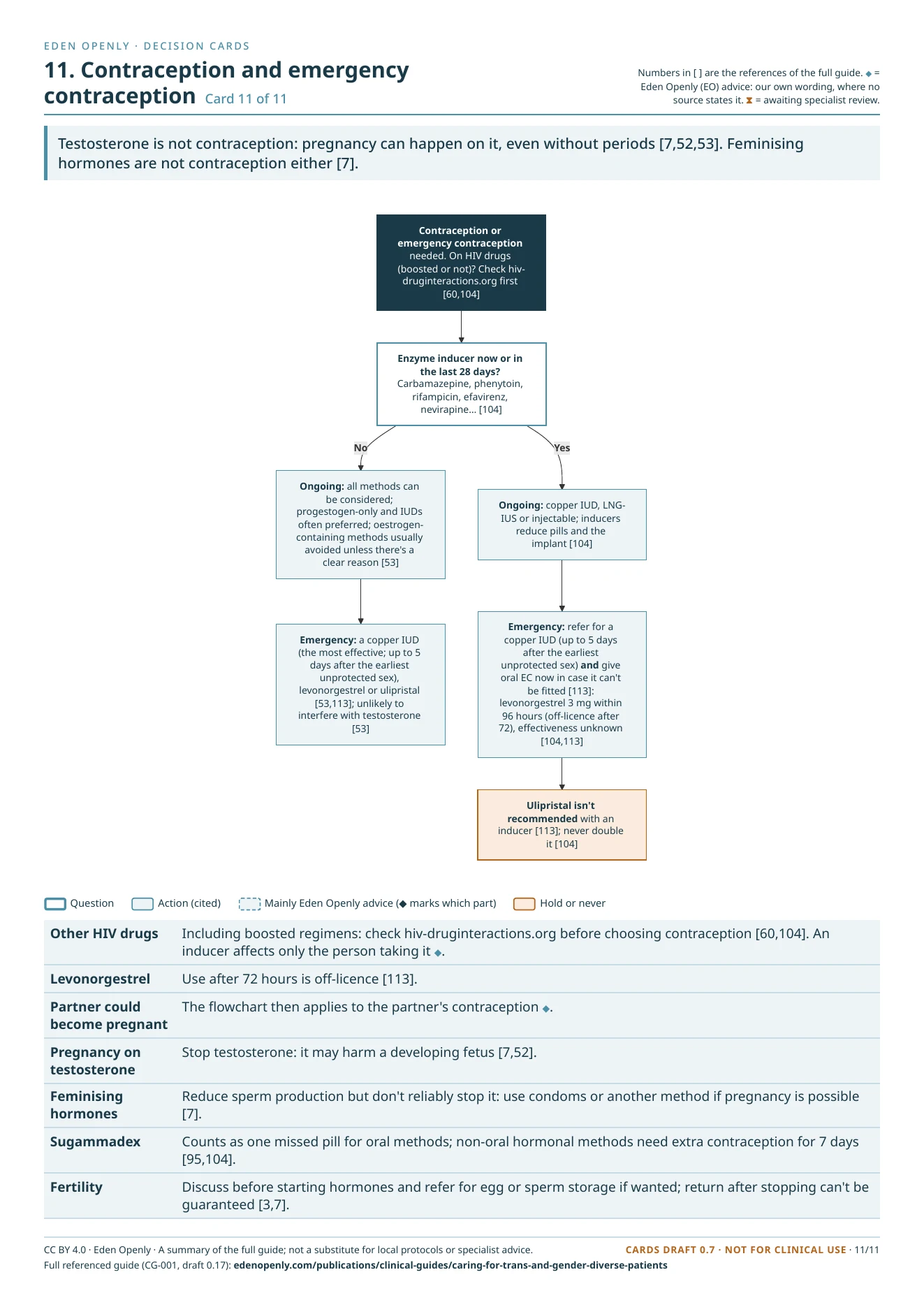 11. Contraception and emergency contraception
How to read this guide
- This page is the full referenced text behind the print sheets. Every clinical claim is cited to the numbered references.
- Where no source states something and the wording is our own, it is marked (EO advice). On the print sheets the same lines carry ◆.
- ⧗ marks a clause awaiting specialist review.
- UK and US documents are worked examples. Each country edition replaces them with local guidance. Planned editions: English, Korean, Japanese, Traditional Chinese, Thai and Malay.
- This guide is general education for clinicians. It is not individual medical advice and doesn’t replace local protocols or specialist advice.
→ Sheet 1 · In clinic · Sheet 2 · In the ED / on the ward · Tools that assume one of two sexes · References
Sheet 1 · In clinic
1. The first two minutes
Negative experiences in healthcare are common, and they keep people away. In the 2015 US Transgender Survey (about 28,000 respondents):
- a third of those who had seen a provider in the past year reported at least one negative experience related to being trans;
- 23% had not sought care they needed for fear of mistreatment [35].
In a 2017 Korean national survey of trans adults, 42.7% had delayed or avoided hospital visits in the past 12 months [36]. SOC8 notes that past negative experiences are associated with avoiding care in the future [7]. The first few minutes of a consultation decide whether the patient comes back.
- Name and pronouns. Ask what name and pronouns the patient uses, use them throughout, and record them where your system allows [7,34]. Ask which words they prefer for their body, too [7].
- Only the history you need. Limit questions about gender history to what’s relevant to today’s problem. Patients shouldn’t have to teach you [34]. In the US survey, 15% had been asked unnecessary or invasive questions about being trans that were unrelated to their visit [35]. If a question is relevant, saying why you’re asking helps. (This last point is EO advice; it isn’t stated in the sources.)
- Records. Where your system allows, keep the name and sex on legal documents (needed for identity checks) separate from the name and pronouns the patient uses [34]. Keep an up-to-date list of the organs present, so that screening and examination follow anatomy rather than the sex marker [7]. Treat gender history as confidential and share it only on a need-to-know basis [7].
- Sharing. Ask what may be shared, and with whom, and record it. Don’t tell relatives or next of kin about gender history or hormones without consent, unless disclosure is justified in the public interest; being next of kin doesn’t authorise disclosure [98]. In the UK, disclosing someone’s gender history after legal recognition can be an offence [98].
- Title and pronouns. Record name, pronouns and title (or no title), and use them in letters, even where the sex field is binary [7,52].
- What you write travels. Records, request forms, referral letters, prescriptions and anything shared with insurers or employers may be seen by many people. In some jurisdictions, disclosing that someone is trans carries legal or safety risk. Agree with the patient how information is recorded and shared, and record the minimum necessary, accurately: the clinical fact (the hormone and dose, or the organs present) rather than the identity when that is enough. Clinically essential information, safeguarding duties and legally required reports can’t be left out: explain any disclosure that can’t be avoided, and use restricted-access fields where your system has them. (EO advice.)
- Fear of a record drives people away from care. In the Korean survey:
- 10 of the 61 people who had bought hormones without a prescription said they didn’t want a record of treatment in their medical history;
- 9 of the 25 who had not sought a diagnosis feared discrimination from a psychiatric diagnosis on their record [36].
- A patient who can’t trust what you write will stop telling you, or stop coming [7,35].
- Fear of a record drives people away from care. In the Korean survey:
- Examination. Examine only what’s relevant to the presenting problem. A respiratory infection, for example, isn’t a reason to examine the genitals [34]. Explain what you plan to do and why before you start, and remind the patient they can stop the examination at any time [34]. For intimate examinations, explain why the examination is needed and what it involves. Offer a chaperone wherever possible, and don’t assume the patient doesn’t want one. This is professional guidance for any patient; the UK’s GMC is one example [45]. If no suitable chaperone is available, or the patient isn’t comfortable with the one offered, offer to delay the examination if the delay won’t harm their health [45]. Let the patient choose the chaperone’s gender where possible [76]. Use the smallest speculum and lubricant, and offer self-insertion or self-collected swabs where suitable [34,82].
- If you misgender someone, apologise briefly, correct yourself and carry on. (EO advice.)
2. What they may be taking
| Common options | Notes | |
|---|---|---|
| Feminising | Oestradiol: oral or sublingual, transdermal patch or gel, or injectable: valerate or cypionate, IM [3,7] or SC, which gives similar levels [126]. Valerate is the more widely available ester [126]. Other esters, such as benzoate, are used in some countries and aren’t covered by the main guidelines [126], so ask which one (EO advice for the last point) | Ethinylestradiol, including contraceptive pills used as hormones, should not be used. It carries the highest VTE risk [7]. |
| Testosterone blocker: cyproterone acetate, spironolactone or a GnRH analogue. Which one depends largely on the country: spironolactone in the US, GnRH analogues in the UK, cyproterone in Europe [7] | Most clinics prescribe oestradiol with a blocker [7]. Some patients take oestradiol alone, for example after orchidectomy, when blockers are no longer needed [44]. | |
| Progesterone, sometimes | SOC8 found insufficient evidence that its benefits outweigh its risks [7]. | |
| Masculinising | Testosterone: injectable (enanthate or cypionate, IM or SC; injectable undecanoate, IM, never SC), transdermal gel, or patch [3,7] |
Self-sourced hormones. Some patients take hormones bought online or obtained from friends, often because prescribed care is hard to reach. How common this is varies widely by setting:
| Setting | Figure |
|---|---|
| US | 2–8% of those taking hormones [35] |
| UK | At one gender clinic, 23% of new referrals were already taking hormones (32% of trans women, 6% of trans men), and 70% of them bought them online [37] |
| Korea | 25% of those who had taken hormones had at some point bought them without a prescription (32% of transfeminine and 12% of transmasculine respondents), most often because they had no psychiatric diagnosis [36] |
SOC8 notes that self-sourced hormones are, for many people, “the only means of acquiring medically necessary” treatment, and asks clinicians to take a harm-reduction approach [7]. Ask without judgement, check bloods and blood pressure, and help the patient move to prescribed, monitored treatment [7]. See also section 8.
Don’t stop hormones on your own. Stopping is itself an intervention:
- Stopping oestrogen can bring back distressing symptoms, including low mood and anxiety, within a few days [39].
- It may cause bone loss, and will after the ovaries or testes have been removed [7].
- SOC8 asks that any interruption be “as brief as possible” [7].
When to hold the problem drug, not the hormones. Holding a drug for a clinical reason isn’t stopping hormones. Don’t stop the oestradiol or testosterone by reflex: hold the drug that is the problem, and reassess as the situation changes, because acute illness, surgery, thrombosis or a new interaction can shift the balance. (EO advice.)
| Situation | What to hold | What to keep |
|---|---|---|
| High potassium, AKI, dehydration or low blood pressure | Spironolactone [19]. UK sick-day guidance pauses diuretics during dehydrating illness [74]. Decide about any ACE inhibitor or ARB too (Sheet 2) (EO advice) ⧗ | Oestradiol. Alone, it may not fully suppress testosterone, so tell the prescriber [3,75] |
| Meningioma found | Cyproterone, permanently [9,12] | Oestradiol |
| Liver injury confirmed, with no other cause | Stop cyproterone [12] | Oestradiol; tell the prescriber, as suppression may be lost, and recheck LFTs (EO advice) |
| Confirmed DVT or PE | Cyproterone, which is contraindicated with existing thrombosis or embolism [12,106] | Continuing oestradiol on full anticoagulation is an option, after discussion with the patient and prescriber [41] |
| MI, stroke or TIA | Cyproterone: its warnings name MI and stroke [106] | Decide about oestradiol or testosterone early with the cardiology or stroke team and the prescriber. Treat the event by its usual protocol; don’t start anticoagulation just to continue hormones. (EO advice.) |
| Haematocrit above about 54%, confirmed on repeat or with symptoms | Testosterone, until it falls; restart at a lower dose [86] | Discuss dose and formulation with the prescriber [25,86] |
| Pregnancy | Testosterone [7,51] | |
| Surgery | Usually nothing [58] | Testosterone [58]. Oestradiol: decide case by case [40,58] |
Usual doses (an overview for checking a regimen, not a substitution calculator: products differ by country and strength) [3,7]:
| Drug | Usual adult range |
|---|---|
| Oestradiol, oral | 2–6 mg/day |
| Oestradiol, patch | 25–200 µg/day |
| Oestradiol valerate or cypionate, IM or SC | 5–30 mg every 2 weeks, or 2–10 mg weekly [3,7]. A 2024 scoping review found that these doses often give levels above the target range, and suggests starting at 5 mg weekly or less [126] |
| Spironolactone | 100–300 mg/day |
| Cyproterone acetate | 10 mg/day is current practice (SOC8) [7]. The 25–50 mg/day range (Endocrine Society 2017) predates the meningioma data: flag 25 mg/day or more to the prescriber [9,11] |
| GnRH analogue | e.g. 3.75 mg monthly or 11.25 mg every 3 months |
| Testosterone enanthate or cypionate | 50–100 mg weekly (IM or SC), or 100–200 mg IM every 2 weeks |
| Testosterone undecanoate | EU/UK (Nebido-type): 1000 mg IM; the second dose may come at 6 weeks, then every 10–14 weeks, adjusted on the trough level [51]. US (Aveed): 750 mg IM, again at 4 weeks, then every 10 weeks, with 30 minutes’ observation after each injection [114] |
| Testosterone gel | Depends on the product’s strength. Guideline range 50–100 mg/day [3,7]; Testogel 16.2 mg/g: usual starting dose 40.5 mg/day, range 20.25–81 mg/day [73] |
Doses are adjusted to hormone levels [7]. HIV drugs can change them (Sheet 2) [60].
- Running out, or a prescriber’s service closing: bridge, don’t stop. Continue the established regimen, on the same route where possible (Sheet 2, “Ran out of hormones”) [7].
- Starting or restarting in older age: reassess cardiovascular and VTE risk, prefer transdermal oestradiol, start low and titrate [7,34].
- Nonbinary patients may want partial or lower-dose regimens. Some combinations of effects aren’t achievable, so discuss what to expect [7,34].
- Some testosterone effects are permanent, even if it’s stopped: a deeper voice, facial hair, male-pattern hair loss and genital growth [7].
3. Red flags (act or refer)
| On oestrogen | On testosterone |
|---|---|
| VTE: unilateral leg swelling, chest pain, breathlessness. Oestrogen roughly doubles VTE risk compared with cisgender men and women, but the absolute risk is low [5]. In a 2026 Dutch cohort, trans women had about 2.4 VTEs per 1,000 person-years, about 1.8 times the rate in men of the general population [8]; the cohort is observational and spans regimens used since 1972 [8]. Ethinylestradiol carries the highest risk and should not be used [6,7]. Guidelines prefer transdermal oestradiol if the patient is over 45 or has had VTE before [7]. Smoking adds risk; advise stopping [7]. | Haematocrit above 54%: the common guideline action point. (Thresholds vary: the 2017 guideline defines erythrocytosis as above 50% [3], and in men a haematocrit above 48% is a reason not to start testosterone [86].) The thresholds come from other populations and haven’t been validated by outcome data in trans men [129]. If the patient is well, repeat the test (EO advice), then review dose and formulation (see section 5) [25,86]. If they have symptoms, assess the same day (Sheet 2). |
| Stroke or MI symptoms: treat as for anyone. The arterial risk of modern oestradiol is uncertain. One US cohort found more ischaemic stroke in people starting oestrogen; a 2026 Dutch cohort found no excess over men [5,8]. In the Dutch cohort, MI in trans women was lower than in men and ischaemic stroke similar [8]; across cohorts, the stroke evidence is mixed [5,8,110]. Manage the usual risk factors, smoking above all. After an MI or stroke, cyproterone is held [106]; see Sheet 2. | Cardiovascular risk: in the 2026 Dutch cohort, MI was more common in trans men than in women [8]. Assess and manage the usual risk factors. |
| Cyproterone and meningioma: new or worsening headache, visual change, hearing loss, seizures or limb weakness. Risk rises with cumulative dose and is highest at 25 mg/day or more [9,10]. Use the lowest effective dose: 10 mg/day is current practice [7]. Flag 25 mg/day or more to the prescriber [9,11]. The studies are of higher doses, so the risk at 10 mg/day or less hasn’t been quantified [10,11], and the excess falls after stopping [10]. Be alert to symptoms [9,12]; image the brain if new neurological symptoms appear (EO advice). Stop permanently if a meningioma is found [9]. | Bleeding that persists 6–12 months after testosterone has reached male-range levels (with LH and FSH suppressed): treat as abnormal uterine bleeding. Exclude pregnancy, check hormone levels, and image the pelvis, using transabdominal ultrasound if transvaginal is declined. Involve gynaecology [16]. Persistent bleeding can come from endometrial hyperplasia or malignancy, best evaluated with imaging and endometrial biopsy [16]. Bleeding can return after missed or late doses: do a pregnancy test (ovulation may resume) and discuss contraception [52,53]. Other unexplained new bleeding after amenorrhoea warrants the same work-up. (EO extrapolation.) |
| Cyproterone and the liver: hepatotoxicity is dose-related and usually appears months into treatment. Check LFTs before starting, periodically, and if symptomatic [12]. | New pelvic or abdominal pain: if pregnancy is possible, do a pregnancy test first. Testosterone isn’t contraception, and ovulation can happen without periods [7,16]. Consider ectopic pregnancy [16] and torsion. Then consider atrophic or infectious vaginitis, cervicitis, cystitis, STIs, adhesions or post-surgical causes, and musculoskeletal or pelvic-floor causes [16]. Vaginal atrophy: a short course of vaginal oestrogen may help; absorption is minimal and shouldn’t interfere with testosterone [34]. |
| Prolactin: headache, visual-field change or galactorrhoea. Mild rises are common, and larger with cyproterone. Prolactinoma is rare (see section 5) [3,14,15]. | Severe acne or scalp hair loss: expected effects, not emergencies. Acne usually starts within 1–6 months and peaks at 1–2 years. Scalp hair loss can start from 6–12 months in those predisposed [3]. Treat acne as usual. Finasteride may help bothersome hair loss, but may impair clitoral growth and facial or body hair [7]. |
| Spironolactone and hyperkalaemia: uncommon (about 2–2.5%) and usually mild in healthy users [17,18]. Risk is higher over 45, with renal impairment, and with ACE inhibitors, ARBs, NSAIDs, trimethoprim or potassium supplements [18,19]. | Rising blood pressure, or sleep apnoea: hypertension is a recognised risk on testosterone [3]. Severe hypertension and sleep apnoea are relative contraindications [7]. Check blood pressure at reviews [3]. |
4. Screening: screen the organs present
The UK programme is used below as a worked example; each country edition replaces it with the local programme.
- Cervix present (trans men and nonbinary people): offer cervical screening as for cisgender women [7]. People registered as male may not be invited automatically and may need to opt in (NHS England) [20].
- On testosterone, unsatisfactory samples are about ten times more common, and more so the longer it has been taken [16]. Screening can be uncomfortable or painful [20].
- A smaller (paediatric) speculum helps, as long as it isn’t so short that it needs excessive pressure. A small amount of water-based lubricant on the outer speculum also helps [16,20].
- Vaginal oestrogen for about a week beforehand is listed as one anecdotal option [16].
- Testosterone use helps the lab interpret the sample [16]. Agree with the patient whether to note it on the form: for someone registered as male, it discloses that they are trans (see the section 5 tips). Screening should never be a condition of testosterone treatment [16].
- HPV self-sampling may suit some patients [7].
- After vaginoplasty there is no cervix, so no cervical screening [89].
- Breast tissue:
- Trans women on long-term oestrogen: screen as for cisgender women, taking hormone duration and age into account [7]. UCSF advises not starting screening before at least 5 years of feminising hormones, nor before age 50 [34]. In the UK this is ages 50–71, every 3 years. Patients registered as male are referred by their GP [20].
- Trans men without chest surgery: screen as for cisgender women [7].
- A new lump goes on the usual urgent pathway. Breast cancer risk on oestrogen is higher than in men, lower than in women [91]. If the sex marker blocks a referral or test, override it or escalate [71].
- After chest masculinisation: after reduction only, screen as for cisgender women. After mastectomy, no screening approach is validated [34]. A new lump still needs investigating: mammography may not be feasible, so ultrasound or MRI may be needed [34]. This is for investigating a lump, not for screening.
- Prostate: always retained after vaginoplasty. It can be examined via the neovagina, where it lies on the anterior wall [7]. Screen according to individual risk [3]. PSA is markedly suppressed on oestrogen, so a “normal” PSA doesn’t reassure (see section 5) [21,22].
- Bone density: hormone therapy itself isn’t an indication for DXA [7]. Consider DXA:
- after gonadectomy, especially with gaps in hormones or after stopping them [3,7];
- in long-term low sex-hormone states [7];
- with the usual risk factors.
For low-risk trans women on hormones, the Endocrine Society suggests screening from age 60 [3].
- For DXA Z-scores, use the reference database for the person’s gender identity (for nonbinary people, sex recorded at birth). For FRAX, there’s no evidence on which sex to enter, so state which one you used [90].
- Sexual health: test for STIs at every site used for sex. After vaginoplasty there’s a prostate but no cervix [89]. The neovagina and neovulva can still be infected, for example with gonorrhoea, chlamydia or herpes, and a urine test may be more useful than a neovaginal swab for gonorrhoea and chlamydia [127]. For PrEP, see section 8.
- Cardiovascular: check blood pressure, lipids, glucose and HbA1c, weight and smoking, as for anyone [3,7].
- No risk calculator is validated for people on hormones. Use the sex assigned at birth, the affirmed gender or an average of the two, depending on age at starting and duration, and consider running both [7,34].
- SOC8 suggests the affirmed gender is likely most appropriate if hormones started around puberty [7].
5. Reading the bloods
The rule of thumb: after about 12 months on stable hormones, many results behave like those of the patient’s affirmed gender. Some don’t. The lab report usually flags against the legal sex on file, so the flag can be wrong in either direction. (“Stable” in the reference-interval studies means at least 12 months on hormones [23,24].)
| Test | Which range to use (stable therapy, at least 12 months) | Notes |
|---|---|---|
| Haemoglobin, haematocrit, red cells | Affirmed gender: female range on oestrogen, male range on testosterone | Values were “not clinically different” from cisgender ranges [23]. ADLM says they align by about 6 months on testosterone [59]. Monitoring: every 3 months in the first year, then once or twice a year [3,7]. |
| Haematocrit on testosterone | Male range. Above 54% is the level guidelines treat as needing action [86,129]; the 2017 guideline defines erythrocytosis as above 50% [3] | Expect a rise: typically about 3–7 percentage points over the first year, steepest in the first 3 months [128]. Most people stay below the thresholds, but some cross them: in a cohort of 1,073 trans men, 0.5% exceeded 54% on two measurements (2.2% once) [25].
What the number is: the thresholds are drawn from other populations; no trials have tested outcomes of acting on them in trans men [129], and the risk at different cut-offs is still to be studied [128]. An unvalidated threshold isn’t a wrong one, so keep monitoring and act on it, but explain it honestly to patients. (EO advice for the last sentence.) In a well patient, repeat an isolated high value before acting, just before the next injection (trough) and with the patient well hydrated. (EO advice.) A patient with symptoms needs same-day assessment (Sheet 2). The factors linked to erythrocytosis are smoking, long-acting undecanoate injections, higher BMI and lung conditions; switching to transdermal testosterone is one option [25]. |
| Creatinine | Not simply the affirmed range. In cross-sectional data, creatinine sat in the cisgender male range in both cohorts, with no shift towards the female range on oestrogen [24] | One review recommends affirmed-gender ranges for creatinine after 3 months on hormones [26]. The sources disagree, which is a further reason not to rely on creatinine-based eGFR for decisions. |
| eGFR (decisions) | Calculate it with both the male and the female setting and use the range [59,62]. If it’s below 60, consider additional markers of kidney function: cystatin C (or a combined creatinine–cystatin C eGFR) and, where dosing depends on it, a measured GFR, to clarify filtration; urine ACR assesses kidney damage, not filtration [59,62] | No consensus exists on which sex to use [59]. Cystatin C also shifts with hormones, inflammation, steroids and thyroid disease [62]. After 12 months on oestradiol plus cyproterone acetate, cystatin C eGFR rose by about 7 mL/min/1.73m², and on testosterone it fell by about 6; these are point estimates [27]. In acute illness or AKI, see Sheet 2 [61,62]. |
| ALP, ALT, AST, GGT | Generally shift towards the affirmed gender | Cross-sectional data [24]. |
| HDL cholesterol | Lower on testosterone than in cisgender women, often below the female target (≥50 mg/dL) but above the male one (≥40 mg/dL) | Interpret cardiovascular risk accordingly [24]. Triglycerides may rise. The effects are small [34]; manage with standard cardiovascular risk assessment [3]. |
| HbA1c, electrolytes, urea, hsCRP | Little change; use standard ranges | In reference-interval data, spironolactone slightly shifted sodium but not potassium [24]. That isn’t reassurance about hyperkalaemia risk (section 3). |
| PSA | Very low on oestrogen. The usual 4 ng/mL cut-off is “likely far too high” [21] | In 210 trans women over 40 on oestrogen: median 0.02 ng/mL, 95th percentile 0.6 ng/mL, undetectable in 36% [21]. No validated cut-off exists. Finasteride and dutasteride roughly halve PSA again: use a baseline taken on treatment and look for a confirmed rise from the lowest value [108] (EO review). The 0.6 ng/mL figure is a cohort percentile, not a reference interval or a referral trigger [22], and a ‘normal’ result under 4 doesn’t reassure. Discuss a confirmed rise, or an unexpectedly high value, with urology, taking account of age, prostate history, 5α-reductase inhibitors and the patient’s wishes. (EO advice.) |
| Oestradiol | Guideline convention: 100–200 pg/mL (about 367–734 pmol/L), with testosterone below 50 ng/dL (about 1.7 nmol/L) [3,7] | The Endocrine Society says oestradiol “should not exceed” this range [3]. A 2025 systematic review of 49 studies found no evidence that it improves outcomes [28]. Treat it as a guide, with testosterone suppression and clinical progress as the more meaningful markers [28]. Oestradiol assays don’t measure ethinylestradiol or conjugated oestrogens: a low result on these doesn’t mean low exposure, so never raise the dose on it [34]. On injections, record the ester and the days since the last injection: levels peak about 2 days after valerate, and most studies report trough levels, taken just before the next dose [126]. Read a level against its timing, and discuss a high trough with the prescriber. (EO advice for the last sentence.) |
| SHBG | Not routinely needed | Oral oestradiol raises SHBG: about 45% higher than transdermal at 3 months [30]. A high SHBG alone doesn’t mean treatment is failing [29,31] (EO review). If testosterone isn’t suppressed despite apparently adequate oestradiol, calculated free or bioavailable testosterone (from SHBG and albumin) can help [29,31]. Free oestradiol has no established clinical role [29]. (EO review.) |
| Testosterone (trans men) | Male range: target 400–700 ng/dL (about 14–24 nmol/L) [3,7] | Injectable enanthate or cypionate: measure midway between injections. Undecanoate: measure just before the next injection; if below 400 ng/dL, adjust the interval. Gel: measure after at least 1 week of daily use, at least 2 hours after application [3,7]. |
| Testosterone (trans women) | Below 50 ng/dL (about 1.7 nmol/L) [3,7] | If it isn’t suppressed, check adherence, the oestradiol level and whether an anti-androgen is needed. |
| LH, FSH | Trans-specific intervals needed; cisgender ranges don’t apply [32,33] | In trans women, spironolactone lowers LH, FSH and progesterone and raises AMH [32]. In trans men, these are best interpreted by a specialist [33]. |
| Prolactin | Trans men: cisgender female range, though this depends on the assay [33]. Trans women: mild rises are common, and larger with cyproterone [14,15] | In one cohort, prolactin rose on cyproterone and fell after it was stopped [14]. Prolactinoma is rare [15]. Routine monitoring is contested: the Endocrine Society suggests periodic checks [3]; SOC8 makes no recommendation [7]. Investigate persistent or marked rises, or symptoms. Repeat a mild rise on a sample taken without venepuncture stress [99]. Antipsychotics, especially risperidone, commonly raise prolactin [99]. Above about 250 µg/L (about 5,300 mIU/L; 1 µg/L ≈ 21.2 mIU/L) raises concern for a prolactinoma but isn’t diagnostic: check medicines and, where appropriate, macroprolactin [99]. With headache or visual symptoms, arrange MRI and formal visual fields [14,99], and refer to endocrinology. A mild rise alone doesn’t need MRI. (Referral and last point: EO advice.) |
| Troponin | Serial measurements. If your lab uses sex-specific cut-offs, the affirmed-gender cut-off is provisionally recommended [59] | In one cohort, affirmed-gender thresholds didn’t significantly reclassify patients [70]. Data are limited [26]. |
Practical tips
- Take blood away from gel sites (use the other arm, or another site if gel goes on both). Gel on the skin can falsely raise testosterone or oestradiol. If a result looks implausibly high, check LH and FSH [59].
- After gonadectomy, raised LH and FSH with low sex steroids suggest under-replacement [34].
- If a system blocks a test because of the sex marker, ask the laboratory to override it, and don’t drop the test [59,71].
- Interpret the result yourself. The lab flags against the sex on file. Read the result against the ranges in this table rather than relying on the flag.
- Agree with the patient what goes on the request form. Forms and results are seen by many people. In some jurisdictions, disclosing that a patient is trans carries legal or safety risk. If lab input would help, give the clinical fact, not the identity: for example, “on oestradiol 4 mg/day since 2023”. Never withhold what the laboratory needs for a safe result. Where disclosure risk is real, agree the minimum with the patient, and record your own interpretation of the result in the notes. (EO advice.)
- Before acting on an “abnormal” flag, ask whether it’s actually expected on hormones.
- Before 12 months, or during interruptions, values sit somewhere in between, so interpret with care.
6. Emergencies and inpatients
See Sheet 2 · In the ED / on the ward.
7. Mental health
- Higher rates, and why. Depression and anxiety are more common in trans people than in the general population [7,46]. Being trans is not a mental illness. SOC8 links the higher rates to stigma, discrimination, violence and trauma, often called “minority stress” [7,46,47]. Most of this evidence comes from cross-sectional surveys, so it shows association, not proven cause [46,47]. Social support is linked to better mental health [7].
- Not a condition to treat away. Attempts to change someone’s gender identity (“conversion practices”) don’t work. They are linked to depression, suicidal thoughts and suicide attempts [7].
- SOC8 says they should not be offered [7].
- The UN Independent Expert on SOGI calls them “by their very nature degrading, inhuman and cruel”. He found that they cause “profound psychological and physical damage” and has recommended that States ban them (¶83, ¶86, ¶87(a)) [48].
- As of May 2025, 15 countries banned them nationwide by law, and 14 more did so indirectly through executive circulars and directives [49].
- Each edition’s local reviewer should check the position in their country.
- Support, not gatekeeping. Offer or refer to mental health support that respects the person’s gender. Don’t make therapy a condition of routine or gender-affirming care [7]. Depression or anxiety isn’t a reason to delay treatment, unless it affects the person’s capacity to consent [7]. If they’re admitted for mental health reasons, continue their hormones unless there’s a medical reason not to, and use their name and pronouns on the ward [7].
- Ask directly about thoughts of suicide, plans and means. Don’t use risk scales to predict suicide [96].
- Abuse can target identity: threats to out someone, misgendering, and denying their identity [93,101]. Ask when the patient is alone [96]. Controlling how someone presents is a recognised tactic [105]; controlling or hiding their hormones is one form of it. (EO advice.) Refer to specialist LGBT+ domestic abuse services where available (in the UK, for example, Galop). Standard safety plans may not fit, and sharing information can out the person [105]. Confidentiality is subject to local safeguarding and mandatory reporting law; assess immediate danger. (EO advice.)
- If capacity is lost (for example dementia), keep using the person’s established name and pronouns [7]. Decisions about hormones follow local capacity and best-interests law, any advance decision and the person’s known wishes; a relative’s preference isn’t authority on its own. Involve the original prescriber where possible. (EO advice.)
8. Pharmacists
Interactions to check
| Drug | Interaction |
|---|---|
| Enzyme inducers (carbamazepine, phenytoin, primidone, barbiturates, rifampicin, rifabutin, nevirapine, efavirenz; possibly also St John’s wort) | May reduce the effect of oestradiol. Induction can persist for about 4 weeks after stopping [50]. They also reduce hormonal contraception: see section 9 [104]. |
| Strong or moderate CYP3A4 inhibitors (azole antifungals, macrolides, verapamil, diltiazem, grapefruit juice; for HIV boosters, see the next row) | Can raise oestradiol levels [50]. |
| HIV antiretrovirals | Not a contraindication to hormones [7]. Unboosted integrase inhibitors (dolutegravir, bictegravir, raltegravir) don’t interact; cobicistat-boosted elvitegravir does. Cabotegravir has no predicted effect on hormones, but high-dose testosterone with exercise training may lower long-acting cabotegravir and rilpivirine levels by the end of the dosing interval; consider drug-level or closer viral-load monitoring [60]. Oestradiol: ritonavir-boosted PIs, efavirenz, etravirine and nevirapine are predicted to lower it; cobicistat-boosted regimens, unboosted atazanavir and fostemsavir to raise it. Cyproterone and testosterone: all boosted regimens and unboosted atazanavir raise them (lenacapavir raises cyproterone only); efavirenz, etravirine and nevirapine lower them [60]. Where cyproterone levels may rise, review with the prescriber or pharmacist. Don’t copy the chart’s absolute cyproterone doses: they start at 25 mg/day, above the 10 mg/day used in current practice (section 2), so never increase an established low dose to match them. (EO advice.) Check every regimen on the Liverpool HIV interaction checker (hiv-druginteractions.org), and check levels if in doubt [7,60]. |
| HIV PrEP | Daily PrEP works for trans women who take it [88]. Hormones modestly lower PrEP drug levels (by about 12–32% in small studies), and PrEP didn’t lower oestradiol levels in those studies [66,87]. Tell patients that PrEP doesn’t affect their hormones [112]: worry about an interaction can affect adherence. (EO advice for the last point.) Use daily, not event-driven, PrEP with oestradiol [81,87]. Receptive vaginal or front-hole sex (including trans men): daily TDF/FTC. Advice on time to protection differs: WHO says to start 7 days before exposure [81]; CDC notes that time to maximal protection is unknown, but pharmacokinetic data suggest daily TDF/FTC reaches maximum levels in cervicovaginal tissue after about 20 days (about 7 days in rectal tissue) [112]. Neovaginal tissue hasn’t been studied. Event-driven dosing isn’t for them, and TAF isn’t recommended for vaginal exposure [7,81]. Injectable cabotegravir is the alternative [112]. Before starting, confirm HIV-negative status: a negative laboratory antigen/antibody test within the past week and no symptoms of acute HIV (add an HIV RNA test after a recent exposure). Repeat testing (antigen/antibody plus RNA) at least every 3 months on oral PrEP, and at 1 month and then every 2 months on injectable cabotegravir [112]. Oral tenofovir PrEP: check renal eligibility with the measure the drug requires. CDC uses Cockcroft–Gault creatinine clearance: ≥60 mL/min for TDF/FTC, ≥30 mL/min for TAF/FTC [112] (US example). eGFR isn’t interchangeable with it. Cockcroft–Gault uses sex, so calculate it both ways and involve a pharmacist when the result decides eligibility [63]. (EO advice for the last point.) CDC doesn’t require creatinine testing for injectable cabotegravir [112]. Hepatitis B: screen before oral tenofovir PrEP, but don’t delay starting while waiting for the result; vaccinate people who aren’t immune. Hepatitis B doesn’t rule out PrEP, but stopping tenofovir can cause a hepatitis flare, so prescribe and stop it with a clinician experienced in hepatitis B [112]. Injectable cabotegravir: no expected interaction with oestradiol [60]. The chart’s high-dose testosterone caution is for long-acting cabotegravir plus rilpivirine as HIV treatment; its relevance to cabotegravir-only PrEP isn’t established, so check the interaction checker. (EO advice.) Injectable lenacapavir (every 6 months) is now recommended by WHO [119] and CDC (a strong recommendation, for people weighing at least 35 kg) [118]. Do a laboratory HIV antigen/antibody test on the day of each injection (or within the previous 7 days), plus an HIV RNA test at the start if available; don’t delay the first injection for the RNA result [118]. Starting isn’t injection-only: day 1 is a 927 mg injection plus 600 mg by mouth, and day 2 is 600 mg by mouth [123]. If HIV RNA testing wasn’t available at the start, repeat a laboratory antigen/antibody test at 4 weeks [118]. Missed doses and protection after stopping need HIV-specialist advice. (EO advice.) No dose change is expected for oestradiol or testosterone [119]. Lenacapavir is predicted to raise cyproterone levels [60]: review with the prescriber or pharmacist, and don’t raise an established low dose. (EO advice.) Moderate and strong CYP3A4 inducers (such as rifampicin, rifabutin, carbamazepine, phenytoin and phenobarbital) can substantially reduce lenacapavir levels and need supplemental lenacapavir doses [118,119]. The label’s supplemental doses apply only when an inducer is started in someone already on lenacapavir (a strong inducer no sooner than 2 days after the first dose); it gives no dosing for starting lenacapavir in someone already taking a moderate or strong inducer [123]. In that case, seek HIV pharmacist or specialist advice rather than improvising a dose. (EO advice.) Because lenacapavir inhibits CYP3A4, it can raise levels of some other drugs for up to 9 months after the last injection, so dose adjustment and monitoring may be needed [118,119,123]. |
| Lamotrigine | Oestrogen-containing contraceptives lower lamotrigine levels and may reduce seizure control. The oestradiol SmPC says the effect hasn’t been studied but is expected [50]. In one drug-monitoring study (79 women on mostly oral, menopausal-dose oestradiol or estriol), lamotrigine concentration-to-dose ratios were significantly lower than in matched controls, by about a sixth; ethinylestradiol lowered them by about a third [117]. (Percentages are EO calculations.) Feminising doses and transdermal or injectable routes haven’t been studied [107]. Stopping oestrogen can raise lamotrigine levels (shown with contraceptive pills): watch for toxicity and consider a level [72]. Take a baseline level, and recheck after starting, changing or stopping oestradiol [72]. Starting lamotrigine in someone already on oestrogen: follow the normal dose escalation; don’t speed it up [72]. |
| Levothyroxine | Oral oestrogen raises thyroid-binding globulin. People on thyroxine may need a higher dose: recheck TFTs after starting or changing oestrogen [50,54]. |
| Testosterone | Increases the effect of warfarin and other coumarin anticoagulants: monitor INR closely, especially when testosterone starts or stops [51,73]. Can lower insulin or anti-diabetic requirements. With SGLT-2 inhibitors, the risk of erythrocytosis is higher: monitor haematocrit and haemoglobin [51]. |
| Testosterone gel | Wash hands after applying, and cover the dry site with clothing. Wait at least 1 hour before showering. Wash the site before skin contact with others. Keep children and pregnant people away from the site; transfer can virilise others. Not on the genitals [73]. |
| Spironolactone | Severe hyperkalaemia can occur with ACE inhibitors, ARBs, NSAIDs, heparins, other potassium-sparing diuretics, potassium supplements or salt substitutes, and with co-trimoxazole. It also reduces lithium clearance [19]. |
Injections
- Testosterone enanthate and cypionate can be given subcutaneously or intramuscularly [3,7]. Injectable undecanoate is intramuscular only, never subcutaneous (an oral undecanoate also exists); follow the exact product’s protocol. Nebido (EU/UK): inject very slowly, over two minutes, and observe the patient during and immediately after each injection for pulmonary oil microembolism [51]. Aveed (US): inject over 60–90 seconds, then observe in the healthcare setting for 30 minutes after every injection; it is supplied only through a restricted programme (REMS) [114].
- Teach technique and give sharps disposal advice.
- Never share needles. Sterile equipment protects against blood-borne infection [7].
Self-sourced products. The dose and content may be unknown, and injectables may not be sterile [7]. For injected oestradiol, ask which ester, the dose, how often, and the date of the last injection. (EO advice.) Contraceptive pills used as hormones contain ethinylestradiol, which carries the highest clot risk [7]. Don’t refuse care. Take a non-judgemental history and help the patient towards prescribed, monitored treatment [7].
9. Fertility and contraception
- Testosterone is not contraception. Pregnancy can happen on testosterone, even when periods have stopped, and after long-term use [7,52,53]. Testosterone may harm a developing fetus, so it should be stopped before trying to conceive and throughout pregnancy [7,52].
- Contraception for people on testosterone. All current methods can be considered, subject to the usual medical contraindications [53]. Progestogen-only methods and IUDs (copper or hormonal) are often preferred, and progestogens can also stop bleeding. Oestrogen-containing methods aren’t ruled out, but are usually avoided unless there’s a clear reason [53]. Progestogen-only methods aren’t thought to interfere with masculinisation [52], though data are limited [53]; the copper IUD contains no hormones [53].
- Emergency contraception on testosterone: levonorgestrel, ulipristal or a copper IUD (the most effective). It’s unlikely to interfere with testosterone [53].
- Enzyme inducers (see section 8; they include efavirenz and nevirapine) reduce the effect of combined methods, all progestogen-only pills and the implant, during use and for 28 days after stopping. Use a copper IUD, LNG-IUS or injectable instead [104]. Emergency contraception with an enzyme inducer: copper IUD first (it can be fitted up to 5 days after unprotected sex [113]), and anyone referred on for a copper IUD should be given oral emergency contraception at the time of referral in case it can’t be fitted [113]; if an IUD isn’t possible, levonorgestrel 3 mg (a double dose, off-licence, as is any levonorgestrel use after 72 hours [113]) within 96 hours, explaining that its effectiveness in this situation is unknown [104,113]. FSRH’s interaction guidance allows a single standard dose of ulipristal, with advice that effectiveness is unknown [104], but its emergency contraception guideline says ulipristal isn’t recommended in this situation [113]: prefer the copper IUD or levonorgestrel. Never double the ulipristal [104]. For other HIV drugs, including boosted regimens, use the Liverpool checker before choosing contraception [60,104]. An inducer affects only the person taking it, not their partner’s contraception. (EO advice.)
- Feminising hormones are not contraception either. They reduce sperm production but don’t reliably stop it. If pregnancy is possible, use condoms or another method [7].
- Fertility preservation. Discuss fertility before starting hormones, and refer for egg or sperm storage if wanted [3,7]. Fertility often returns after stopping hormones, but this can’t be guaranteed: long-term data are limited [3,7]. Sperm production can return after stopping hormones, sometimes only after many months, and quality is often reduced (9 cases) [92]. Storage before starting remains advised [7,92].
10. Words that help, words that hurt
Ask which terms the person prefers, including for their body [7]. The pairs below come from a US media style guide [55,56]. Each edition’s local reviewer will check the equivalents in their own language.
| Prefer | Avoid |
|---|---|
| Trans woman, trans man, nonbinary person (“transgender” as an adjective) | “Transgendered”, “a transgender”, “transgenders” [55] |
| “She is a trans woman” | “Identifies as a woman”; “male-to-female” [55] |
| Assigned male or female at birth, used only when there’s a clear reason to mention it | “Born a man”, “biologically male” or “biologically female” [55] |
| Pronouns (“What pronouns do you use?”) | “Preferred pronouns” [55] |
| Transition; gender-affirming care [7,55] | “Sex change”, “pre-op”, “post-op” [55] |
| Their name | Their birth name. Don’t disclose it without permission [56]; record it only where it’s needed for identity matching |
11. Where to get help
- Local gender services and referral routes (a country-specific panel for each edition).
- Community organisations (country-specific).
- The Eden Openly evidence reviews: ER-005 (feminising hormone therapy), ER-008 (hormone monitoring and target ranges), ER-023 (erythrocytosis), and the companion Evidence Notes.
- Ask a Colleague: the clinician-to-clinician consult network (link once live).
Sheet 2 · In the ED / on the ward
For emergency doctors, ward nurses, anaesthetists and hospital pharmacists. Find the presentation, act on the first lines, and use the clinic sheet for background. Numbers in [ ] refer to the shared source register.
Before anything else
- Name and pronouns. Ask what the patient uses and use them throughout [7,58]. The wristband and labels may carry the legal name, so link it to the name used [59,71], and confirm identity by your local positive-identification policy (for example date of birth and hospital number), including at handover. (EO advice.)
- Ask which organs and surgeries are present. Pregnancy testing, catheterisation, screening, transfusion and reference ranges all depend on it [7].
- What you write travels. Agree with the patient how forms, referrals and reports are worded, and record the minimum necessary: the clinical fact (the hormone and dose, the organs present) rather than the identity, when that is enough. This can’t override essential clinical documentation, safeguarding or legally required reports. (EO advice; see Sheet 1, section 1.)
- Pregnancy test whenever pregnancy is possible (a uterus and ovaries, and a possible exposure), whatever the sex on file and even on testosterone or without periods. Offer it before surgery (see Surgery), before imaging or drugs that could harm a pregnancy, and in abdominal or pelvic pain [7,16,58]. Never delay resuscitation or life-saving treatment for it. A bedside urine test avoids system blocks. Systems that use legal sex can block these orders [59,71]: ask the laboratory to override, and don’t drop the test. (EO advice.)
- Don’t stop hormones by reflex. Hold the drug that is the problem, and reassess if the situation changes (EO advice). See “When to hold the problem drug” in Sheet 1, section 2. Ask about self-sourced hormones too.
- Tools that assume one of two sexes. Many scores and cut-offs do. See the table at the end of this sheet.
- Blood transfusion. Compatibility is set by ABO, RhD and antibody testing, as for anyone. The blood bank also needs the sex assigned at birth, or whether the patient could become pregnant, to choose RhD status [59]. As for anyone who could become pregnant, an RhD-negative patient with a uterus should get RhD-negative red cells, including in emergencies [59]. Trans women can receive RhD-positive blood if needed [59]. Tell the transfusion service on a need-to-know basis, explaining why: this is sharing for direct care [58,98]. Never delay an emergency transfusion for this: follow the local emergency protocol. K-negative red cells and anti-D follow local policy for anyone who could become pregnant. (EO advice.)
- VTE: assess every admission as soon as possible [97]. Count oestrogen as a risk factor [50]; it isn’t a reason to withhold prophylaxis [97].
By presentation
Chest pain or suspected MI
- Treat as for any patient.
- Troponin: use serial measurements. If your lab reports sex-specific cut-offs, ADLM provisionally recommends the one for the affirmed gender [59]. In one cohort, affirmed-gender thresholds didn’t significantly reclassify patients [70]. Data are limited [26]; interpret a borderline result against the trend, the ECG and the clinical picture [26].
- ECG: new ST elevation at the J-point in at least two contiguous leads, without LV hypertrophy or LBBB, suggests acute coronary occlusion. The V2–V3 thresholds differ by sex and age, and the lowest is ≥1.5 mm [116,121]. Using ≥1.5 mm in V2–V3 for everyone is a conservative choice for escalation, not a validated trans-specific rule. Where fibrinolysis rather than PCI is the reperfusion route, confirm with cardiology before treating on this threshold alone. (EO advice.) An ECG below threshold doesn’t rule out an occlusion MI: use serial ECGs, troponin and the clinical picture.
- PE on the differential: oral hormone use is a PERC criterion, so PERC can’t rule out PE in someone taking oestrogen [68]. Don’t use PERC for anyone on oestrogen, by any route. (EO advice.) Go to Wells and D-dimer or imaging.
- If MI is confirmed: hold cyproterone [106]. Don’t stop oestradiol or testosterone by reflex: decide early with the cardiology team and the prescriber, considering the hormone, its route and dose. (EO advice.)
Stroke or TIA
- Treat on the usual stroke pathway. Hormone therapy isn’t listed among the conditions that weigh against IV thrombolysis in current US guidance [124], nor in its 2019 predecessor [103].
- Hold cyproterone [106]. Decide about oestradiol early with the stroke team and the prescriber (route, dose, cause of the stroke, bleeding risk); don’t stop it by reflex or continue it unreviewed. (EO advice.)
- Consider cerebral venous sinus thrombosis (see Headache) [67].
Suspected or confirmed DVT or PE
- Suspected DVT or PE: assess on the usual clinical-probability pathway (Wells score, then imaging or D-dimer), giving interim therapeutic anticoagulation if results will be delayed, as your local protocol directs [125]. Confirmed: anticoagulate as standard [125]. Hormones aren’t a reason to delay any of these steps. (EO advice for the last point.)
- Confirmed VTE and hormones: oestradiol is a joint decision with the patient and prescriber. Continuing it on full-dose anticoagulation is a recognised option, and if oestrogen continues, anticoagulation shouldn’t be stopped [41,110]. SOC8 notes acute VTE as a rare reason to suspend hormones [7]. Review route, dose and adherence before deciding; SOC8 suggests transdermal oestradiol after a VTE [7]. (EO advice for the order of steps.)
- Cyproterone: hold it. It is contraindicated with existing thrombosis or embolism [12,106].
- Check for self-sourced ethinylestradiol or contraceptive pills [7].
- On testosterone: check haematocrit.
Headache, visual change or seizure on hormones
- First: assess airway, breathing, circulation and consciousness, and look for red flags. Don’t let fundoscopy or visual-field testing delay imaging or referral for stroke, seizure, thunderclap headache or raised pressure; check fundi and fields when feasible. (EO advice.) Sudden focal signs: see Stroke or TIA.
- Cerebral venous sinus thrombosis: gender-affirming hormones, oestrogen or testosterone, are listed risk factors [67]. With red flags, image the brain urgently by the usual pathway: a sudden severe (thunderclap) headache needs immediate non-contrast CT for haemorrhage; add CT or MR venography if sinus thrombosis is possible; MRI is preferred for suspected meningioma. (EO advice for the imaging order.)
- Meningioma (cyproterone, especially long-term use or 25 mg/day or more) [9,10]: new focal neurology, seizures or visual disturbance need urgent standard assessment and imaging, usually MRI. There’s no routine screening MRI for people without symptoms. (EO advice.) If a meningioma is found, stop cyproterone permanently [9,12]; discuss oestradiol with the neurosurgical team and the prescriber, and tell them about the cyproterone. (EO advice.) 25 mg/day or more marks higher observed risk, not a level below which risk is absent: flag it to the prescriber [9,11,109]. Some meningiomas regress after stopping [11].
- Pituitary: check prolactin. A prolactinoma is rare [15]. With visual symptoms or a markedly raised prolactin, arrange MRI and formal visual fields (Sheet 1, section 5) [14,99].
- Testosterone: check haematocrit (see below).
- Lamotrigine: oestradiol is expected to lower its levels, and limited data support this [50,117]. Check a level and discuss the dose with neurology [72].
Abdominal or pelvic pain, if the person has a uterus or ovaries
- Unstable (shock, peritonism): resuscitate and call emergency gynaecology or surgery at once. If pregnancy is possible, treat as a ruptured ectopic until proven otherwise, but consider other bleeding and torsion. Don’t wait for a pregnancy test. (EO advice.) With high suspicion, a negative urine test doesn’t exclude pregnancy: send serum hCG. (EO advice.) In acute bleeding, follow the haemoglobin trend and the physiology; on testosterone the normal range is the male one [23].
- Pregnancy test first. Testosterone doesn’t reliably prevent pregnancy, and ovulation can occur without periods [7,16].
- Consider ectopic pregnancy [16] and the usual surgical causes, including ovarian torsion. Ovaries kept after hysterectomy can still develop disease [7].
- Then consider: atrophic or infectious vaginitis, cervicitis, cystitis, STIs, adhesions or post-surgical causes, and musculoskeletal or pelvic-floor causes [16].
- If the test is positive with pain or bleeding, it is an ectopic pregnancy until proven otherwise: same-day gynaecology assessment. (EO advice.) Stop testosterone and refer [7,51].
- Offer a choice of ward or a side room. (EO advice.)
Vaginal bleeding on testosterone
- With heavy bleeding or instability: resuscitate, hold anticoagulants and reverse them per the local major-haemorrhage protocol, and see “Before anything else” for transfusion. (EO advice.)
- Check observations and haemoglobin (male range on testosterone) [23]. Exclude pregnancy, check hormone levels, image the pelvis (transabdominal if transvaginal is declined), and involve gynaecology [16]. Ask about missed doses, changes in interval or formulation, and new medicines. (EO advice.)
- Differential: missed or late doses, pregnancy, coagulopathy or anticoagulants, and structural causes; involve gynaecology [34,73].
Acute scrotal pain (testes present)
- Suspect torsion. Admit as an emergency to urology for exploration; don’t wait for imaging. Repair is ideally within 6 hours [34,100].
- Torsion can still happen on feminising hormones. (EO advice.)
After vaginoplasty
| Presentation | Action |
|---|---|
| Can’t pass urine | Confirm retention with a bladder scan; decompression is urgent [43]. Involve the operating team or urology early [57]. The urethral meatus usually sits where it would in a cisgender woman, but healing can place it anywhere from just below the clitoris to inside the vaginal canal [57]. Catheterisation should be by an experienced clinician: a temporary catheter is the usual first step [57], and a small catheter or coudé tip may help [44]. Confirm urine flows before inflating the balloon, and never inflate it in the neovagina; send urine for culture. (EO advice.) Don’t make repeated or blind attempts: if it’s difficult, urology places a urethral or suprapubic catheter [44,57]. No urology on site: escalate or transfer, without letting it delay decompression. (EO advice.) |
| Bleeding | Resuscitate if unstable; check observations, haemoglobin, clotting and any anticoagulant. (EO advice.) Some bleeding is expected early on; soaking through pads or a large haematoma needs action [57]. Bleeding often comes from the urethral edge: apply direct pressure [57]. Further steps (packing the canal and re-examining at 48–72 h; silver nitrate, cautery or suture) are surgeon-led or surgeon-directed [57]. Late heavy bleeding suggests hypergranulation or a tear and needs surgical examination [57]. |
| Discharge or spotting, still able to dilate | Often hypergranulation tissue, treated with silver nitrate [57]. Non-urgent. Refer to the surgical team. |
| Can’t insert the dilator at all | Contact the operating team the same day. (EO advice: no source gives a deadline.) There is no role for urgent re-canalisation in the ED [57]. Never force it: dilation injury can cause a rectovaginal fistula [43]. With analgesia and lubricant, the patient may try a thinner dilator and work back up [57]. If still unable, the canal may be packed until the surgeon reviews, under surgical direction [57]. Never advise stopping dilation [57]. |
| Stool or gas from the vagina | Rectovaginal fistula. Usually stable at presentation [57], but refer urgently to the operating surgeon or colorectal surgery, and assess for sepsis or peritonitis. (EO advice.) Imaging (CT with rectal contrast or MRI) and initial management, which may include faecal diversion, are specialist-led; dilation usually continues, as the surgeon directs [57]. |
| Urine leaking into the vagina, or new incontinence | Possible urethrovaginal fistula (up to 4% of patients). Refer to urology for cystoscopy; early cases may be managed with a catheter [57]. |
| Fever, pain, swelling | Treat infection with antibiotics, and consider drainage [57]. Krakowsky classes a UTI as complicated because the prostate is still there, which affects antibiotic choice and duration; follow your local antibiogram [57]. |
| Prolapse | Make sure the urethral opening isn’t obstructed. Contact the surgical team [57]. |
Refer back to the operating surgeon, or to a local reconstructive urologist if surgery was abroad [57]. Keep the dilation schedule during any admission, unless the surgical team says otherwise [57].
After phalloplasty or metoidioplasty
- Retention: bladder scan, then urology [43,57]. Non-urologists shouldn’t attempt blind urethral catheterisation [43,44]. If the bladder needs decompressing, a suprapubic catheter is placed by an experienced clinician [44,57].
- The vaginoplasty catheter advice (coudé tip) doesn’t apply. (EO advice.) If a suprapubic catheter is in place or was recently removed, check, flush or re-site it through that tract first; otherwise a suprapubic catheter by an experienced clinician, ideally ultrasound-guided. Decompression shouldn’t wait for a transfer: if transfer would delay it, the most experienced clinician available places a suprapubic catheter under ultrasound, with phone advice from urology; if urology isn’t on site, escalate or transfer. (EO advice.)
- Weak stream, dribbling, straining, recurrent UTI, or leaking from a new opening suggest a stricture or fistula: refer before retention develops [57].
- Strictures usually form at a join in the new urethra, most often between its fixed part and the part within the phallus, typically 6–36 months after surgery [44,57].
- Ask which stage of surgery they’re at and where they pass urine from. (EO advice.)
- Erectile implant that is red, hot or exposed: urology the same day (EO advice). Infection can occur at any time, and treatment is usually removal [57].
After chest masculinisation surgery
- Early, one-sided, tense swelling and pain, sometimes with bruising, is a haematoma until proven otherwise. Most need evacuation, so get urgent surgical review [34].
Airway and anaesthesia after facial or voice surgery
- Airway assessment is unreliable after facial or neck procedures. Jaw reduction can crowd the oropharynx, chin implants make thyromental distance unreliable, and a tracheal shave makes front-of-neck landmarks harder to find [58].
- After cricothyroid approximation (a voice-raising operation), there may be no cricothyroid membrane, so standard emergency front-of-neck access may not be possible. Plan an alternative in advance [58].
- Within 8–12 weeks of voice surgery, avoid instrumenting the airway unless absolutely necessary. If anaesthesia is needed, prefer regional or sedation, then a supraglottic airway. If intubation is unavoidable, use a microlaryngeal tube (internal diameter 5–6 mm) [58]. Afterwards the glottis may stay smaller (glottoplasty can narrow it by up to a third): use the smallest suitable tube [58].
- Discuss with the gender-affirming surgeon where possible [58]. For surgery near the larynx (for example thyroid surgery), tell the operating surgeon about any previous voice or laryngeal surgery and get the operation note. (EO advice.)
Surgery, elective or emergency
- Hormones: don’t delay emergency surgery over hormones. (EO advice.) For elective surgery, testosterone is generally continued [58]. Oestradiol is an individual decision, considering route, previous VTE, the procedure and thromboprophylaxis [58]; in older patients, some withhold or reduce it temporarily [41]. Agree the plan between anaesthesia, surgery and the prescriber. (EO advice.)
- Offer a pregnancy test to anyone with a uterus and ovaries aged 12–55, whatever their contraception (UK anaesthesia guidance; follow your local policy) [58]. This is the perioperative rule; outside surgery, test whenever pregnancy is possible.
- VTE: assess VTE and bleeding risk with the usual tool; oestrogen isn’t a reason to withhold prophylaxis [97]. NICE’s general advice is to consider stopping oestrogen-containing contraceptives or HRT 4 weeks before elective surgery [97]. Trans-specific guidance favours an individual decision about oestradiol [41,58]. No study we identified shows that routinely stopping it before surgery reduces VTE [110] (EO review: an absence of evidence).
- Other drugs follow the usual perioperative rules, which differ by country. For SGLT-2 inhibitors, UK guidance omits them on the day before and the day of surgery and checks blood ketones daily [94]; US labels say to withhold them for at least 3 days before surgery (ertugliflozin at least 4), and to restart once the person is clinically stable and eating [120,122]. After emergency surgery, watch for ketoacidosis, including euglycaemic ketoacidosis [122]. Follow your local protocol.
- Sugammadex counts as one missed pill for oral contraceptives, including progestogen-only ones: follow the missed-pill advice. Non-oral hormonal methods need extra non-hormonal contraception for 7 days [95,104]. Testosterone isn’t contraception. Its effect on oestradiol therapy is unclear [58].
- Chest binder: remove it before anaesthesia, with the patient’s consent, and agree when it goes back on [58].
- Spironolactone: watch for hyperkalaemia and AKI [19,58].
- Haematocrit on testosterone: use a recent full blood count where your preoperative-testing policy calls for one. (EO advice.)
- Ward: ask the patient where they would feel safe, follow local policy, and offer a side room where possible [58].
- Transfusion: see “Before anything else”, point 7.
Sepsis, AKI and drug dosing
- In AKI, eGFR is unreliable [61]. Use the change from baseline, and adapt doses while function is unstable [61,62].
- Loading doses: don’t automatically reduce an indicated antibiotic loading dose just because renal function is uncertain; follow drug-specific protocols. (EO advice.) For vancomycin in critically ill adults with suspected serious MRSA infection, consensus suggests 20–35 mg/kg by actual body weight, maximum 3 g, then AUC-guided monitoring; follow your local protocol [115].
- Maintenance doses: once kidney function is stable, calculate eGFR with both the male and the female setting to show the uncertainty [59]; there’s no agreed method [59,62]. eGFR and Cockcroft–Gault creatinine clearance aren’t interchangeable: use whichever the drug’s label specifies. Female-based equations may underestimate kidney function in trans adults on either hormone [63]. Dosing weights (ideal or adjusted body weight) are sex-based too. Involve a clinical pharmacist and use drug levels. (EO advice, following [62].) ⧗
- Then adjust by drug levels wherever you can (for example aminoglycosides) [61,62].
- Contrast: don’t withhold contrast needed for diagnosis because of a sex-dependent eGFR. Use the range and the clinical trend. (EO advice.)
- Cystatin C also moves with hormones, inflammation, steroids and thyroid disease, so it isn’t a fix in acute illness [62].
- Spironolactone: hold it during the illness (sick-day rule) [19,74].
- VTE: assess as for any medical admission; offer prophylaxis if VTE risk outweighs bleeding risk [97].
High potassium, dehydration or low blood pressure on spironolactone
- Treat hyperkalaemia as standard.
- Hold spironolactone [19]. Decide about an ACE inhibitor or ARB by the potassium level, renal function and why it was prescribed. (EO advice.) ⧗ Treat severe hyperkalaemia, with ECG monitoring, per your emergency protocol. Also review NSAIDs, heparins, co-trimoxazole (trimethoprim) and potassium supplements [19]. Its active metabolites last 14–17 hours, so recheck potassium after stopping [19].
- Keep the oestradiol going. Oestradiol alone may not fully suppress testosterone, so tell the prescriber, who will choose what to restart [3,75].
Haematocrit above about 54% on testosterone
- Unwell (headache, visual change, chest pain, neurological signs or signs of a clot): assess urgently. Check BP, hydration and oxygen saturation, and look for thrombosis, including venous sinus thrombosis [67], and other causes. Discuss with haematology: venesection is an option for selected patients, not an automatic emergency treatment [86]. (EO advice.)
- Guidelines advise holding testosterone until the haematocrit falls, looking for hypoxia and sleep apnoea, and restarting at a lower dose. Venesection is an option [86]. With undecanoate, “hold” means deferring the next injection. Levels fall slowly, so check the trough before the next dose [51,86]. Switching formulation is a prescriber decision. (EO advice.)
- Other causes: smoking, lung disease and high BMI [25]; sleep apnoea [86]; SGLT-2 inhibitors [51]. If the rise is unexplained, consider a primary cause and discuss with haematology. (EO advice.)
- The thresholds come from other populations and haven’t been validated by outcome data in trans men [129]; an unvalidated threshold isn’t a wrong one. (EO advice for the last point.)
HIV: antiretrovirals, PrEP and PEP
- HIV treatment is not a reason to stop hormones [7].
- Check every regimen on the Liverpool HIV interaction checker (hiv-druginteractions.org) [60].
-
Unboosted integrase inhibitors (dolutegravir, bictegravir, raltegravir) don’t interact. Cobicistat-boosted elvitegravir does. Cabotegravir doesn’t affect hormones, but high-dose testosterone with exercise training may lower long-acting cabotegravir and rilpivirine levels [60].
-
Oestradiol: ritonavir-boosted PIs, efavirenz, etravirine and nevirapine are predicted to lower it; cobicistat-boosted regimens, unboosted atazanavir and fostemsavir to raise it [60].
-
Cyproterone and testosterone: all boosted regimens and unboosted atazanavir raise them, so review the dose with the prescriber or pharmacist, and don’t raise an established low cyproterone dose to match the chart (EO advice); lenacapavir raises cyproterone only; efavirenz, etravirine and nevirapine lower them [60].
-
Check hormone levels if in doubt [7].
-
- PrEP: daily PrEP works for trans women who take it [88]. Hormones modestly lower PrEP drug levels (about 12–32% in small studies); PrEP didn’t lower oestradiol in those studies [66,87]. Use daily, not event-driven (“2-1-1”), PrEP for anyone on oestradiol [81,87]. For receptive vaginal or front-hole sex, baseline HIV testing and injectable options, see Sheet 1, section 8 [7,81].
- PEP: start as soon as possible, ideally within 24 hours and no later than 72 hours. Continue for 28 days. Preferred regimens: bictegravir/emtricitabine/tenofovir alafenamide, or dolutegravir plus tenofovir (TAF or TDF) plus emtricitabine or lamivudine [111]; neither interacts with hormones [60]. Take a baseline HIV test (rapid if available), but don’t delay the first dose for laboratory results. PEP isn’t recommended when the source has HIV with sustained viral suppression; if it isn’t known whether the source has HIV, decide case by case [111]. Retest with antigen/antibody plus HIV RNA at 4–6 weeks (this can be skipped if PEP started within 24 hours, no doses were missed and PrEP isn’t starting) and finally at 12 weeks after exposure, and offer PrEP if exposure risk continues [111]. Check interactions [60].
- Contraception with enzyme-inducing HIV drugs (efavirenz, nevirapine): see Sheet 1, section 9 [104].
- STIs: test every site used for sex. After vaginoplasty there’s a prostate but no cervix [89]; the neovagina can still be infected, and a urine test may be more useful than a neovaginal swab for gonorrhoea and chlamydia [127]. Some laboratories reject specimens labelled “neovaginal”: agree the labelling with your laboratory in advance. (EO advice for the last point.)
Self-sourced hormones, injections and silicone
- Ask, without judgement: what was taken, how, and from where [7]. Check hormone levels when the result will change a decision. (EO advice.)
- Injection abscess: culture the pus and check tetanus status. (EO advice.) A septic abscess, or one at a hormone injection site, follows usual management: imaging mustn’t delay drainage. (EO advice.) Where silicone or filler was injected, ask what was injected: nodules can evolve into sterile abscesses or fistulas, and granulomas can form [34]. Ultrasound, CT or MRI can help [34]; image first and involve the surgical team before incising, since surgical excision may be needed [34]. (EO advice for the order of steps.) After silicone or filler injections, abscesses can involve M. abscessus, so send AFB culture [34,102].
- Shared needles or non-prescribed injections: offer HIV, hepatitis B and hepatitis C testing, and hepatitis B vaccination [80].
- Silicone or “filler” injections (“pumping”): ask specifically.
- Sudden breathlessness, low oxygen, fever or confusion soon after injection suggests silicone embolism. It can be fatal, and neurological involvement carries the worst outlook [34,77]. Give oxygen and escalate early to critical care. (EO advice.)
- Later problems: hard lumps and granulomas, infection, migration and high calcium [34,102]. Check calcium if there are symptoms or extensive granulomas. (EO advice.)
- It’s common in some settings: in one San Francisco sample, one in six trans women had had filler injections [78].
- Help the patient move to prescribed, monitored treatment [7].
Assault or violence
- Trans people experience high rates of violence [35], including 1.7–2.5 times the rate of intimate partner violence [93]. Ask in private, as you would any patient. Abuse can target identity: threats to out someone, misgendering, denying their identity and controlling how they present [93,101,105]. Refer to specialist LGBT+ domestic abuse services where available [105].
- Sexual assault: emergency contraception and HIV PEP are time-sensitive: start PEP within 72 hours, without waiting for test results, and continue for 28 days with follow-up testing (see HIV) [111]. Offer post-rape care: emergency contraception and a pregnancy test if pregnancy is possible, PEP, STI prophylaxis and hepatitis B vaccination as your local protocol indicates, and psychosocial support [80]. Offer forensic examination with consent, by a trained team per local protocol. (EO advice.) Use a trauma-informed approach [127]: say what you are going to do before each step, ask consent for each part of the examination, and offer self-collected swabs for STI testing where suitable. (EO advice for the steps.) Sample the sites the person is concerned about [59]; after vaginoplasty, use the smallest speculum or an anoscope with lubricant [82]. There is no cervix [89]. Neovaginal and atrophic tissue tear more easily [82]. Trans survivors may find exposing their body very difficult [105]; offer a choice of examiner gender where possible. (EO advice.)
- Police: the patient decides. Don’t share with the police without consent unless required by law or justified in the public interest [98].
- In police and safeguarding reports, share only the minimum legally or clinically necessary; trans status is often not needed. (EO advice.)
- Document every injury fully, including what was said. “Minimum necessary” applies to gender history, not to injuries. (EO advice.)
- After facial surgery, tell the radiologist about any implants or previous facial or laryngeal procedures. (EO advice.) Facial injuries after facial or voice surgery: see Airway [58].
- Ward: ask the patient where they would feel safe, and offer a side room where possible [58].
Mental health crisis
- Do the standard risk assessment, as for anyone. Ask directly about thoughts of suicide, plans and means; don’t use risk scales to predict suicide [96].
- Don’t attribute the crisis to being trans, and don’t use it to question the person’s identity. Being trans isn’t a mental illness [7].
- Continue hormones on admission unless contraindicated, and use the person’s name and pronouns [7].
- Searches and intimate care: offer staff of the gender the patient prefers, where safe and possible. Make an individual plan for dilators and binders with the patient and the psychiatric team (and the surgical team after recent surgery), weighing stenosis risk against ligature and safety policy, rather than removing them by default; dilation is time-critical after recent vaginoplasty [57]. (EO advice, except the dilation point.)
- Binders restrict breathing [58], so plan ahead of restraint, sedation or rapid tranquillisation: remove them with consent where possible, by the least restrictive approach, and follow your rapid-tranquillisation protocol. (Extrapolated from anaesthesia; there are no psychiatric data.)
- Antipsychotics commonly raise prolactin [99].
- Overdose of spironolactone or oestradiol: manage as in each SmPC (section 4.9) and with your poisons service [19,50].
- Psychotropics: spironolactone reduces lithium clearance [19]; enzyme-inducing anticonvulsants lower oestradiol [50]; lamotrigine levels shift with oestrogen [72].
- Ward: ask the patient where they would feel safe; offer a side room where possible [58].
Fracture after gonadectomy or a long gap in hormones
- After a low-trauma fracture, assess as a fragility fracture: bone profile, falls assessment and osteoporosis treatment. (EO advice.) DXA is indicated after gonadectomy or prolonged hypogonadism [90].
- Re-establish hormone therapy: first ask why hormones stopped (a clot, a hormone-sensitive cancer, a meningioma, access or choice), then refer back to the prescriber. (EO advice.) After gonadectomy, hormone replacement is needed [3], and anti-androgens are for those who haven’t had an orchidectomy [58]. Over 45, transdermal oestradiol is suggested [7].
- FRAX: there is no evidence on which sex to enter. State which one you used [90]. T-scores use the female reference database for everyone [90]. Screen for secondary causes as usual [90]. DXA Z-scores use the database for the person’s gender identity (for nonbinary people, sex recorded at birth) [90].
Breast lump
- A clinically suspicious lump goes on the local suspected-cancer pathway, whatever the sex marker; don’t route it as gynaecomastia. (EO advice.) Breast cancer is more common in trans women on oestrogen than in men, though less common than in women [91]. The breast radiologist chooses the imaging: after chest surgery or with implants, mammography may not be feasible, and ultrasound or MRI may be needed [34].
- If the sex marker blocks a test or referral, override it or escalate. Don’t delay [71].
- Note any implants or silicone injections: injected silicone can make mammography ineffective [34]. Ask about family history. Don’t stop oestradiol while awaiting a diagnosis; if cancer is confirmed, hormones are a decision for the breast team, patient and prescriber. (EO advice.)
Ran out of hormones, or self-sourced supply on the ward
- First, is there a reason to hold a drug now (Sheet 1, “When to hold the problem drug”)? If so, don’t bridge that drug; call the prescriber. (EO advice.)
- Bridge, don’t stop. Verify the regimen (product, route, dose, schedule, last dose) from prescriptions, packaging or pharmacy records, and continue it if it’s clinically appropriate; SOC8 supports maintaining existing hormones on admission [7]. Substitute only with pharmacy or the prescriber: formulations aren’t dose-equivalent, and the Sheet 1 dose table is an overview, not a conversion chart. Don’t reproduce an unverified self-sourced dose; if it can’t be verified, bridge with a formulary product in the usual range (section 2) rather than give nothing. (EO advice.) ⧗ Never substitute ethinylestradiol or a combined pill [7].
- If the patient is nil by mouth, oestradiol can be given as a patch, gel or injection [3,7].
- Injectable oestradiol: a verified injection schedule continues on the ward: give the due dose rather than skip it. Valerate and cypionate can be given IM or SC [126]. (EO advice for the first point.)
- Testosterone is a controlled drug in many countries, including the UK (Schedule 4 Part II) and the US (Schedule III) [83,84]. Check local rules before prescribing or supplying it.
- Self-sourced products usually can’t be given on the ward; follow local patients’-own-drugs policy, and replace them with a prescribed equivalent. Contact the home prescriber, and take baseline bloods as the clinical situation needs. If a blocker is unavailable, oestradiol alone short-term is reasonable, though testosterone suppression may be lost; tell the prescriber [3,75]. (EO advice, except where cited.)
- Lamotrigine: if oestrogen stops, lamotrigine levels may rise. Watch for toxicity and consider a level [72].
- Warfarin: monitor INR closely when testosterone starts or stops [51,73]. Anticoagulated: consider subcutaneous rather than intramuscular injection, for testosterone esters and for injectable oestradiol [126]. (EO advice.)
Tools that assume one of two sexes
| Tool | What to do |
|---|---|
| PERC rule | Can’t rule out PE on oestrogen by any route (hormone use is a criterion) [68]. |
| hs-troponin cut-off | Serial measurements. Affirmed-gender cut-off provisionally recommended [59]. |
| ECG STEMI criteria (V2–V3) | New J-point elevation in at least two contiguous leads; ≥1.5 mm in V2–V3 as a conservative escalation threshold, never a rule-out [116,121]. (EO advice.) |
| eGFR, creatinine clearance (Cockcroft–Gault), dosing weight | Compare both sex settings; eGFR and Cockcroft–Gault aren’t interchangeable. Use drug-specific loading regimens; set maintenance with a pharmacist and drug levels where available [59,62,63]. |
| Haemoglobin, haematocrit | Affirmed-gender range on stable hormones (at least 12 months in the reference studies [23]; ADLM says by 6 months [59]). |
| FRAX, DXA | FRAX: no evidence on which sex to use; state which you used. T-scores: female database for everyone [90]. |
| Cardiovascular risk calculators | No calculator is validated; use the sex assigned at birth, the affirmed gender or an average, and consider running both [7,34]. |
| Blood bank | Sex assigned at birth, for product selection [59]. |
References
Numbering follows the working register and will be compacted at version 1.0. “Read in full” means the full text was read; “Abstract only” means only the abstract was available to us.
- Hembree WC, Cohen-Kettenis PT, Gooren L, et al. Endocrine treatment of gender-dysphoric/gender-incongruent persons: an Endocrine Society clinical practice guideline. J Clin Endocrinol Metab 2017;102(11):3869–903. doi:10.1210/jc.2017-01658 · Read in full
- Getahun D, Nash R, Flanders WD, et al. Cross-sex hormones and acute cardiovascular events in transgender persons: a cohort study. Ann Intern Med 2018;169(4):205–13. doi:10.7326/M17-2785 · Read in full
- Goldstein Z, Khan M, Reisman T, Safer JD. Managing the risk of venous thromboembolism in transgender adults undergoing hormone therapy. J Blood Med 2019;10:209–16. doi:10.2147/JBM.S166780 · Read in full
- Coleman E, Radix AE, Bouman WP, et al. Standards of Care for the Health of Transgender and Gender Diverse People, Version 8. Int J Transgend Health 2022;23(S1):S1–S259. doi:10.1080/26895269.2022.2100644 · Read in full
- van Zijverden LM, Thijs A, van Diemen JJK, et al. Transgender persons receiving gender-affirming hormone therapy: risk of acute cardiovascular events in a Dutch cohort study. Eur Heart J 2026;47(21):2660–9. doi:10.1093/eurheartj/ehaf837 · Read in full
- European Medicines Agency. Restrictions in use of cyproterone due to meningioma risk. EMA/147755/2020, 27 Mar 2020; and MHRA. Cyproterone acetate: new advice to minimise risk of meningioma. Drug Safety Update June 2020 · Read in full
- Weill A, Nguyen P, Labidi M, et al. Use of high dose cyproterone acetate and risk of intracranial meningioma in women: cohort study. BMJ 2021;372:n37. doi:10.1136/bmj.n37 · Read in full
- Millward CP, Keshwara SM, Islim AI, et al. Development and growth of intracranial meningiomas in transgender women taking cyproterone acetate as gender-affirming progestogen therapy: a systematic review. Transgend Health 2022;7(6):473–83. doi:10.1089/trgh.2021.0025 · Read in full
- Cyprostat 50 mg tablets: Summary of Product Characteristics. Updated 16 Oct 2024 · Read in full
- Defreyne J, Nota N, Pereira C, et al. Transient elevated serum prolactin in trans women is caused by cyproterone acetate treatment. LGBT Health 2017;4(5):328–36. doi:10.1089/lgbt.2016.0190 · Read in full
- Nota NM, et al. Brain 2018;141:2047–54. doi:10.1093/brain/awy108 · Read in full
- Obedin-Maliver J. Pelvic pain and persistent menses in transgender men; and Hsiao KT. Screening for cervical cancer in transgender men. UCSF Transgender Care Guidelines, 17 Jun 2016 (pelvic-pain page marked ‘pending revision 2024’) · Read in full
- Millington K, Liu E, Chan Y, et al. The utility of potassium monitoring in gender-diverse adolescents taking spironolactone. J Endocr Soc 2019;3(5):1031–8. doi:10.1210/js.2019-00030 · Read in full
- Hayes H, Russell R, Haugen A, et al. The utility of monitoring potassium in transgender, gender diverse, and nonbinary individuals on spironolactone. J Endocr Soc 2022;6(11):bvac133. doi:10.1210/jendso/bvac133 · Read in full
- Aldactone 25 mg: Summary of Product Characteristics. Updated 2 Feb 2026 · Read in full
- NHS England. NHS population screening: information for trans and non-binary people. 2026 · Read in full
- Nik-Ahd F, De Hoedt AM, Butler C, et al. Prostate-specific antigen values in transgender women receiving estrogen. JAMA 2024;332(4):335–7. doi:10.1001/jama.2024.9997 · Read in full
- Hall R, Ball R, Bancroft E, et al. Systematic review of PSA reference intervals in the gender diverse population with prostates. BJU Int 2025;136(4):568–77. doi:10.1111/bju.16825 · Read in full
- Greene DN, Winston McPherson G, Rongitsch J, et al. Hematology reference intervals for transgender adults on stable hormone therapy. Clin Chim Acta 2019;492:84–90. doi:10.1016/j.cca.2019.02.011 · Read in full
- Humble RM, Greene DN, Schmidt RL, et al. Reference intervals for clinical chemistry analytes for transgender men and women on stable hormone therapy. J Appl Lab Med 2022;7(5):1131–44. doi:10.1093/jalm/jfac025 · Read in full
- Madsen MC, van Dijk D, Wiepjes CM, et al. Erythrocytosis in a large cohort of trans men using testosterone: a long-term follow-up study on prevalence, determinants, and exposure years. J Clin Endocrinol Metab 2021;106(6):1710–7. doi:10.1210/clinem/dgab089 · Read in full
- Nolan BJ, Cheung AS. Laboratory monitoring in transgender and gender-diverse individuals. Clin Chem 2025;71(3):358–77. doi:10.1093/clinchem/hvaf001 · Read in full
- van Eeghen SA, Wiepjes CM, T’Sjoen G, et al. Cystatin C–based eGFR changes during gender-affirming hormone therapy in transgender individuals. Clin J Am Soc Nephrol 2023;18(12):1545–54. doi:10.2215/CJN.0000000000000289 · Read in full
- Winston-McPherson GN, Thomas TA, Krasowski MD, et al. Estradiol concentrations for adequate gender-affirming feminizing therapy: a systematic review. LGBT Health 2025;12(7):477–89. doi:10.1089/lgbt.2024.0407 · Read in full
- Eden Openly. ER-008: Hormone monitoring & target ranges. doi:10.5281/zenodo.21274736 · Read in full
- Tebbens M, Heijboer AC, T’Sjoen G, Bisschop PH, den Heijer M. The role of estrone in feminizing hormone treatment. J Clin Endocrinol Metab 2022;107(2):e458–66. doi:10.1210/clinem/dgab741 · Read in full
- Eden Openly. SHBG: the protein that controls what your hormones actually do. edenopenly.com/clinical/shbg-hormone-binding-globulin-hrt/ · Read in full
- Greene DN, Schmidt RL, Winston McPherson G, et al. Reproductive endocrinology reference intervals for transgender women on stable hormone therapy. J Appl Lab Med 2021;6(1):15–26. doi:10.1093/jalm/jfaa028 · Read in full
- Greene DN, Schmidt RL, Winston-McPherson G, et al. Reproductive endocrinology reference intervals for transgender men on stable hormone therapy. J Appl Lab Med 2021;6(1):41–50. doi:10.1093/jalm/jfaa169 · Read in full
- Deutsch MB (ed.). Guidelines for the Primary and Gender-Affirming Care of Transgender and Gender Nonbinary People. 2nd ed. UCSF Transgender Care, 17 Jun 2016 · Read in full
- James SE, Herman JL, Rankin S, et al. The Report of the 2015 U.S. Transgender Survey. Washington, DC: National Center for Transgender Equality; 2016 · Read in full
- Lee H, Park J, Choi B, Yi H, Kim SS. Experiences of and barriers to transition-related healthcare among Korean transgender adults: focus on gender identity disorder diagnosis, hormone therapy, and sex reassignment surgery. Epidemiol Health 2018;40:e2018005. doi:10.4178/epih.e2018005 · Read in full
- Mepham N, Bouman WP, Arcelus J, et al. People with gender dysphoria who self-prescribe cross-sex hormones: prevalence, sources, and side effects knowledge. J Sex Med 2014;11(12):2995–3001. doi:10.1111/jsm.12691 · Read in full
- Boskey ER, Taghinia AH, Ganor O. Association of surgical risk with exogenous hormone use in transgender patients: a systematic review. JAMA Surg 2019;154(2):159–69. doi:10.1001/jamasurg.2018.4598 · Read in full
- Herndon J, Gupta N, Davidge-Pitts C, et al. Genital surgery outcomes using an individualized algorithm for hormone management in transfeminine individuals. J Clin Endocrinol Metab 2024;109:2774–83. doi:10.1210/clinem/dgae269 · Read in full
- King H, Padilla Kelley T, Shatzel JJ. Gender-affirming hormone therapy in the transgender patient: influence on thrombotic risk. Hematology Am Soc Hematol Educ Program 2024;2024(1):652–63. doi:10.1182/hematology.2024000592 · Read in full
- Schardein JN, Zhao LC, Nikolavsky D. Management of vaginoplasty and phalloplasty complications. Urol Clin North Am 2019;46(4):605–18. doi:10.1016/j.ucl.2019.07.012 · Read in full
- Bryson C, Honig SC. Genitourinary complications of gender-affirming surgery. Curr Urol Rep 2019;20(6):31. doi:10.1007/s11934-019-0894-4 · Read in full
- General Medical Council. Intimate examinations and chaperones. In effect 30 Jan 2024, updated 13 Dec 2024 (GMC/IEC/1224), ¶8, ¶16, ¶21 · Read in full
- Bockting WO, Miner MH, Swinburne Romine RE, et al. Stigma, mental health, and resilience in an online sample of the US transgender population. Am J Public Health 2013;103(5):943–51. doi:10.2105/AJPH.2013.301241 · Read in full
- Pellicane MJ, Ciesla JA. Associations between minority stress, depression, and suicidal ideation and attempts in transgender and gender diverse (TGD) individuals: systematic review and meta-analysis. Clin Psychol Rev 2022;91:102113. doi:10.1016/j.cpr.2021.102113 · Abstract only
- United Nations Human Rights Council. Practices of so-called “conversion therapy”: report of the Independent Expert on protection against violence and discrimination based on sexual orientation and gender identity. A/HRC/44/53, 1 May 2020. · Read in full
- Global Equality Caucus. IDAHOBIT 2025: charting global progress on banning conversion practices. 16 May 2025 · Read in full
- Progynova 2 mg tablets: Summary of Product Characteristics. Bayer plc; text revised 7 Sep 2026 · Read in full
- Nebido 1000 mg/4 ml solution for injection: Summary of Product Characteristics. Grünenthal Ltd; revised 15 Dec 2025. Licensed only for male hypogonadism; use in trans care is off-label · Read in full
- Hahn M, Sheran N, Weber S, Cohan D, Obedin-Maliver J. Providing patient-centered perinatal care for transgender men and gender-diverse individuals. Obstet Gynecol 2019;134(5):959–63. doi:10.1097/AOG.0000000000003506 · Read in full
- Bonnington A, Dianat S, Kerns J, et al. Society of Family Planning clinical recommendations: contraceptive counseling for transgender and gender diverse people who were female sex assigned at birth. Contraception 2020;102(2):70–82. doi:10.1016/j.contraception.2020.04.001 · Read in full
- GLAAD. Glossary of terms: transgender. In: GLAAD Media Reference Guide, 11th ed. glaad.org/reference/trans-terms · Read in full
- GLAAD. In focus: covering the transgender community. In: GLAAD Media Reference Guide, 11th ed. glaad.org/reference/covering-trans-community · Read in full
- Arafah BM. Increased need for thyroxine in women with hypothyroidism during estrogen therapy. N Engl J Med 2001;344(23):1743–9. doi:10.1056/NEJM200106073442302 · Read in full
- Krakowsky Y, Shah G, Nguyen AV, et al. Gender-affirming care in urology: emergency care of the gender-affirming surgical patient — what the primary urologist needs to know. BJU Int 2024;133(2):124–31. doi:10.1111/bju.16249 · Read in full
- Edwardson S, Flower L, Fawcett E, et al. Peri-operative care of transgender and gender-diverse individuals: guidance for clinicians and departments. Anaesthesia 2024;79(10):1102–16. doi:10.1111/anae.16378 · Read in full
- Thomas TA, Winston-McPherson GN, Amarillo I, et al. ADLM guidance document on incorporating gender diversity in pathology and laboratory medicine. J Appl Lab Med 2026;11(4):887–926. doi:10.1093/jalm/jfag071 · Read in full
- University of Liverpool HIV Drug Interactions Group. Effect of HIV drugs on hormone therapy for gender affirmation. Revised Dec 2025. hiv-druginteractions.org · Read in full
- Kidney Disease: Improving Global Outcomes (KDIGO) AKI Work Group. KDIGO clinical practice guideline for acute kidney injury. Kidney Int Suppl 2012;2(1):1–138. doi:10.1038/kisup.2012.1 · Read in full
- Stevens PE, Ahmed SB, Carrero JJ, et al. KDIGO 2024 clinical practice guideline for the evaluation and management of chronic kidney disease. Kidney Int 2024;105(4S):S117–S314. doi:10.1016/j.kint.2023.10.018 · Read in full
- Fadich SK, Kalayjian A, Greene DN, et al. A retrospective analysis of creatinine-based kidney function with and without sex assigned at birth among transgender adults. Ann Pharmacother 2022;56(7):791–9. doi:10.1177/10600280211050120 · Read in full
- Hiransuthikul A, Janamnuaysook R, Himmad K, et al. Drug-drug interactions between feminizing hormone therapy and pre-exposure prophylaxis among transgender women: the iFACT study. J Int AIDS Soc 2019;22(7):e25338. doi:10.1002/jia2.25338 · Read in full
- Saposnik G, Bushnell C, Coutinho JM, et al. Diagnosis and management of cerebral venous thrombosis: a scientific statement from the American Heart Association. Stroke 2024;55(3):e77–e90. doi:10.1161/STR.0000000000000456 · Read in full
- Kline JA, Mitchell AM, Kabrhel C, et al. Clinical criteria to prevent unnecessary diagnostic testing in emergency department patients with suspected pulmonary embolism. J Thromb Haemost 2004;2(8):1247–55. doi:10.1111/j.1538-7836.2004.00790.x · Read in full
- Wang J, Taur A, Chen A, et al. Sex-specific cardiac troponin thresholds in transgender patients with suspected acute coronary syndrome. JAMA Netw Open 2023;6(10):e2337345. doi:10.1001/jamanetworkopen.2023.37345 · Read in full
- Deutsch MB, Green J, Keatley J, et al. Electronic medical records and the transgender patient: recommendations from the World Professional Association for Transgender Health EMR Working Group. J Am Med Inform Assoc 2013;20(4):700–3. doi:10.1136/amiajnl-2012-001472 · Read in full
- Lamictal tablets: Summary of Product Characteristics. GSK; revised 5 Nov 2025 · Read in full
- Testogel 16.2 mg/g gel: Summary of Product Characteristics. Besins; Jan 2025 · Read in full
- Scottish Government / Healthcare Improvement Scotland. Medication sick day guidance: patient and carer information, v4. 2026 (UK example) · Read in full
- Leinung MC, Feustel PJ, Joseph J. Hormonal treatment of transgender women with oral estradiol. Transgend Health 2018;3(1):74–81. doi:10.1089/trgh.2017.0035 · Read in full
- Tollinche LE, Walters CB, Radix A, et al. The perioperative care of the transgender patient. Anesth Analg 2018;127(2):359–66. doi:10.1213/ANE.0000000000003371 · Read in full
- Schmid A, Tzur A, Leshko L, Krieger BP. Silicone embolism syndrome. Chest 2005;127(6):2276–81. doi:10.1378/chest.127.6.2276 · Read in full
- Wilson E, Rapues J, Jin H, et al. The use and correlates of illicit silicone or “fillers” in a population-based sample of transwomen, San Francisco, 2013. J Sex Med 2014;11(7):1717–24. doi:10.1111/jsm.12558 · Read in full
- World Health Organization. Consolidated guidelines on HIV, viral hepatitis and STI prevention, diagnosis, treatment and care for key populations. Geneva: WHO; 2022 · Read in full
- World Health Organization. Differentiated and simplified pre-exposure prophylaxis for HIV prevention: update to WHO implementation guidance. Geneva: WHO; 2022 · Read in full
- Oke MJ. Improving the forensic genital examination for trans and gender diverse sexual assault complainants: three case reports. Int J Legal Med 2024;138(3):899–909. doi:10.1007/s00414-023-03135-6 · Read in full
- UK. The Misuse of Drugs Regulations 2001 (SI 2001/3998), Schedule 4 · Read in full
- US. Code of Federal Regulations, 21 CFR §1308.13 (Schedule III) · Read in full
- Bhasin S, Brito JP, Cunningham GR, et al. Testosterone therapy in men with hypogonadism: an Endocrine Society clinical practice guideline. J Clin Endocrinol Metab 2018;103(5):1715–44. doi:10.1210/jc.2018-00229 · Read in full
- Shieh E, Marzinke MA, Fuchs EJ, et al. Transgender women on oral HIV pre-exposure prophylaxis have significantly lower tenofovir and emtricitabine concentrations when also taking oestrogen when compared to cisgender men. J Int AIDS Soc 2019;22(11):e25405. doi:10.1002/jia2.25405 · Read in full
- Deutsch MB, Glidden DV, Sevelius J, et al. HIV pre-exposure prophylaxis in transgender women: a subgroup analysis of the iPrEx trial. Lancet HIV 2015;2(12):e512–9. doi:10.1016/S2352-3018(15)00206-4 · Read in full
- Workowski KA, Bachmann LH, Chan PA, et al. Sexually transmitted infections treatment guidelines, 2021. MMWR Recomm Rep 2021;70(4):1–187. doi:10.15585/mmwr.rr7004a1 · Read in full
- Rosen HN, Hamnvik OPR, Jaisamrarn U, et al. Bone densitometry in transgender and gender non-conforming (TGNC) individuals: 2019 ISCD Official Position. J Clin Densitom 2019;22(4):544–53. doi:10.1016/j.jocd.2019.07.004 · Read in full
- de Blok CJM, Wiepjes CM, Nota NM, et al. Breast cancer risk in transgender people receiving hormone treatment: nationwide cohort study in the Netherlands. BMJ 2019;365:l1652. doi:10.1136/bmj.l1652 · Read in full
- de Nie I, van Mello NM, Vlahakis E, et al. Successful restoration of spermatogenesis following gender-affirming hormone therapy in transgender women. Cell Rep Med 2023;4(1):100858. doi:10.1016/j.xcrm.2022.100858 · Read in full
- Peitzmeier SM, Malik M, Kattari SK, et al. Intimate partner violence in transgender populations: systematic review and meta-analysis of prevalence and correlates. Am J Public Health 2020;110(9):e1–e14. doi:10.2105/AJPH.2020.305774 · Read in full
- Centre for Perioperative Care. Guideline for perioperative care for people with diabetes mellitus undergoing elective and emergency surgery. Updated Oct 2023 (UK example) · Read in full
- Bridion 100 mg/mL solution for injection: Summary of Product Characteristics. MSD UK; updated 19 May 2025 · Read in full
- National Institute for Health and Care Excellence. Self-harm: assessment, management and preventing recurrence (NG225). 2022 · Read in full
- National Institute for Health and Care Excellence. Venous thromboembolism in over 16s: reducing the risk of hospital-acquired deep vein thrombosis or pulmonary embolism (NG89). 2018, updated 2019 · Read in full
- General Medical Council. Confidentiality: good practice in handling patient information. 2017 (UK example) · Read in full
- Melmed S, Casanueva FF, Hoffman AR, et al. Diagnosis and treatment of hyperprolactinemia: an Endocrine Society clinical practice guideline. J Clin Endocrinol Metab 2011;96(2):273–88. doi:10.1210/jc.2010-1692 · Read in full
- National Institute for Health and Care Excellence. Clinical Knowledge Summaries: scrotal pain and swelling. Revised Apr 2026 (UK example) · Read in full
- Woulfe JM, Goodman LA. Identity abuse as a tactic of violence in LGBTQ communities: initial validation of the Identity Abuse Measure. J Interpers Violence 2021;36(5–6):2656–76. doi:10.1177/0886260518760018 · Read in full
- Iwamoto SJ, Defreyne J, Rothman MS, et al. Health considerations for transgender women and remaining unknowns: a narrative review. Ther Adv Endocrinol Metab 2019;10:2042018819871166. doi:10.1177/2042018819871166 · Read in full
- Powers WJ, Rabinstein AA, Ackerson T, et al. Guidelines for the early management of patients with acute ischemic stroke: 2019 update to the 2018 guidelines. Stroke 2019;50(12):e344–e418. doi:10.1161/STR.0000000000000211 (corrected version; correction doi:10.1161/STR.0000000000000215) · Read in full
- Faculty of Sexual and Reproductive Healthcare (FSRH) Clinical Effectiveness Unit. Drug interactions with hormonal contraception. May 2022 (UK example) · Read in full
- SafeLives. Guidance for multi-agency forums: LGBT+ people. Undated (data to 2017; accessed 21 Oct 2026) (UK example) · Read in full
- Androcur 50 mg tablets: Summary of Product Characteristics. ADVANZ Pharma; updated 16 Oct 2024 · Read in full
- Medsafe Pharmacovigilance Team. Potential drug interaction between estrogen-based hormone replacement therapy and lamotrigine. Medicines Adverse Reactions Committee (New Zealand), 7 Dec 2023, agenda item 3.2.2 (redacted version) · Read in full
- Eden Openly. ER-013: 5α-reductase inhibitors: finasteride and dutasteride in feminising therapy. v1.0, 2026. doi:10.5281/zenodo.21295654 · Read in full
- Eden Openly. ER-009: Anti-androgens compared. v1.2, 2026. doi:10.5281/zenodo.21383934 · Read in full
- Eden Openly. ER-018: Venous thromboembolism, myocardial infarction and ischaemic stroke in feminising hormone therapy. v1.1, 14 Oct 2026. doi:10.5281/zenodo.23355798 · Read in full
- Tanner MR, O’Shea JG, Byrd KM, et al. Antiretroviral postexposure prophylaxis after sexual, injection drug use, or other nonoccupational exposure to HIV: CDC recommendations, United States, 2025. MMWR Recomm Rep 2025;74(No. RR-1):1–56. doi:10.15585/mmwr.rr7401a1. Erratum: MMWR 2025;74(35):554 · Read in full
- Centers for Disease Control and Prevention, US Public Health Service. Preexposure prophylaxis for the prevention of HIV infection in the United States: 2021 update, a clinical practice guideline. December 2021 (stacks.cdc.gov/view/cdc/112360), pp. 12–30, 42, 50 (US example) · Read in full
- Faculty of Sexual and Reproductive Healthcare. FSRH Guideline: Emergency contraception. March 2017 (amended April 2026), Table 1 and §10.1 (UK example) · Read in full
- Aveed (testosterone undecanoate) injection: US prescribing information. Endo USA; revised July 2025 (US example) · Read in full
- Rybak MJ, Le J, Lodise TP, et al. Therapeutic monitoring of vancomycin for serious methicillin-resistant Staphylococcus aureus infections: a revised consensus guideline. Am J Health Syst Pharm 2020;77(11):835–64. doi:10.1093/ajhp/zxaa036 · Read in full
- Byrne RA, Rossello X, Coughlan JJ, et al. 2023 ESC Guidelines for the management of acute coronary syndromes. Eur Heart J 2023;44(38):3720–826. doi:10.1093/eurheartj/ehad191 · Read in full
- Reimers A. Hormone replacement therapy with estrogens may reduce lamotrigine serum concentrations: a matched case–control study. Epilepsia 2017;58(1):e6–e9. doi:10.1111/epi.13597 (read from the Early View version) · Read in full
- Patel RR, Hoover KW, Lale A, et al. Clinical recommendation for the use of injectable lenacapavir as HIV preexposure prophylaxis — United States, 2025. MMWR Morb Mortal Wkly Rep 2025;74(35):541–9. doi:10.15585/mmwr.mm7435a1 (US example) · Read in full
- World Health Organization. Guidelines on lenacapavir for HIV prevention and testing strategies for long-acting injectable pre-exposure prophylaxis (PrEP). Geneva: WHO; 2025. ISBN 978-92-4-011160-8 (electronic version). §5.1.4 and Table 1, p. 24 · Read in full
- US prescribing information (DailyMed): Jardiance (empagliflozin), Boehringer Ingelheim, rev. 1/2026, §2.3; Farxiga (dapagliflozin), AstraZeneca, rev. 6/2026, §2.4; Invokana (canagliflozin), Janssen, rev. 6/2026, §2.5; Steglatro (ertugliflozin), Merck, rev. 6/2026, §2.3 (US example) · Read in full
- Mills NL, Newby LK, Zaman S, et al. Fifth universal definition of myocardial infarction (2026). Eur Heart J 2026 (advance article). doi:10.1093/eurheartj/ehag101. Co-published in Glob Heart 2026;21(1):64, doi:10.5334/gh.1578. §13 · Read in full
- American Diabetes Association Professional Practice Committee for Diabetes. 16. Diabetes care in the hospital: Standards of Care in Diabetes—2026. Diabetes Care 2026;49(Suppl. 1):S339–55. doi:10.2337/dc26-S016 (perioperative SGLT-2 text; not a numbered recommendation) (US example) · Read in full
- US prescribing information (DailyMed): Yeztugo (lenacapavir) tablets and injection for HIV-1 PrEP. Gilead Sciences; rev. 8/2026. §2.3, §2.5 (Tables 4–5), §5.3, §7.2 (US example) · Read in full
- Prabhakaran S, Gonzalez NR, Zachrison KS, et al. 2026 guideline for the early management of patients with acute ischemic stroke: a guideline from the American Heart Association/American Stroke Association. Stroke 2026;57:e316–e436. doi:10.1161/STR.0000000000000513 (corrected version; correction Stroke 2026;57:e461–e467, doi:10.1161/STR.0000000000000530). Table 8, pp. e364–e367, read from page images (US example) · Read in full
- National Institute for Health and Care Excellence. Venous thromboembolic diseases: diagnosis, management and thrombophilia testing (NG158). 2020, updated 2023. §§1.1.3–1.1.9, 1.3.2–1.3.4 (UK example) · Read in full
- Rothman MS, Ariel D, Kelley C, et al. The use of injectable estradiol in transgender and gender diverse adults: a scoping review of dose and serum estradiol levels. Endocr Pract 2024;30(9):870–8. doi:10.1016/j.eprac.2024.05.008 · Read in full
- Grimstad F, McLaren H, Gray M. The gynecologic examination of the transfeminine person after penile inversion vaginoplasty. Am J Obstet Gynecol 2021;224(3):266–73. doi:10.1016/j.ajog.2020.10.002 · Read in full
- Okano SHP, Braga GC, Cantelli DAL, et al. Effect of testosterone formulations on hematocrit in transgender individuals: a systematic review. Andrology 2025;13(3):422–30. doi:10.1111/andr.13695 · Read in full
- Porat AT, Ellwood M, Rodina M, Dianat S. Erythrocytosis in gender-affirming care with testosterone. Ann Fam Med 2023;21(5):403–7. doi:10.1370/afm.3018 · Read in full