The
Threshold
Understanding the Draft Conversion Practices Bill through evidence, legislation and lived experience.
An independent editorial briefing examining what the Bill names, what it protects, and what may still fall beneath its threshold.
The Threshold is the first Eden Openly Editorial Briefing: a structured examination of the UK Government’s Draft Conversion Practices Bill.
It brings together legislative analysis, published evidence, professional guidance and lived experience to explain not only what the Draft Bill proposes, but how those proposals compare with the way conversion practices are described by clinicians, researchers and survivors.
The briefing distinguishes clearly between evidence, legal analysis and personal reflection. Substantive factual claims are referenced within the individual essays.
- Defines conversion practices and explains why they are most often experienced as sustained pressure rather than dramatic clinical intervention.
- Examines the structure of the Draft Conversion Practices Bill and the deliberately high criminal threshold it creates.
- Identifies why civil protection orders may become one of the Bill’s most practically significant safeguards.
- Asks whether a serious-harm threshold reflects how conversion practices are actually experienced.
- Combines legal analysis with lived experience to show what legislation can name, and what it may struggle to see.
Public debate has largely focused on whether conversion practices should be prohibited.
This briefing asks something narrower.
If Parliament agrees they should be prohibited, does the Draft Bill describe the problem in the way survivors, clinicians and researchers actually describe it?
A real, overdue and carefully limited Bill.
The unresolved question is what falls beneath its threshold.
Conversion practices are not usually the clinic people imagine.
Most often, the harm is quieter: repeated pressure to change, suppress or disappear.
The criminal offence is deliberately narrow.
The conduct must be a conversion practice, abusive, and seriously harmful.
Civil orders may be the practical centre of the Bill.
They are designed to intervene before harm has already happened.
The threshold remains the central policy question.
Can a serious-harm test capture slow, sustained, non-violent pressure?
The briefing unfolds across four connected essays.
Define the practice
What the practice is, what it is not, and what the evidence says.
Read the Bill
What the Draft Bill does, how the offence works, and what the protections create.
Test the threshold
Where the legal threshold may struggle to capture what survivors actually describe.
Return to the person
Why the evidence, and the people living behind it, must stay central.
Each essay can be read independently. Together, they form a single editorial argument.
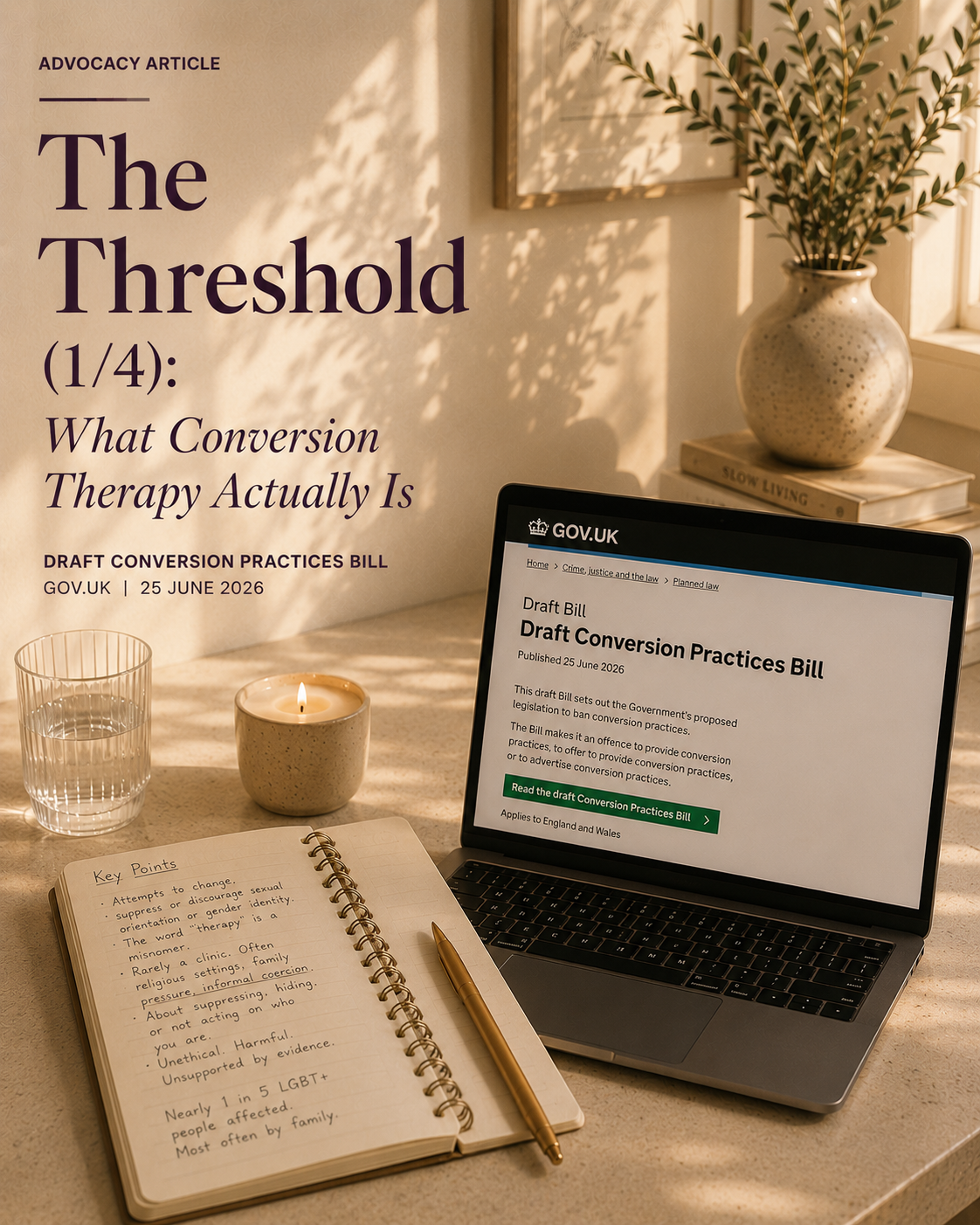
What Conversion Therapy Actually Is
What the term means, why “therapy” is the wrong word, and why the common version is usually quieter than people imagine.
Read essay →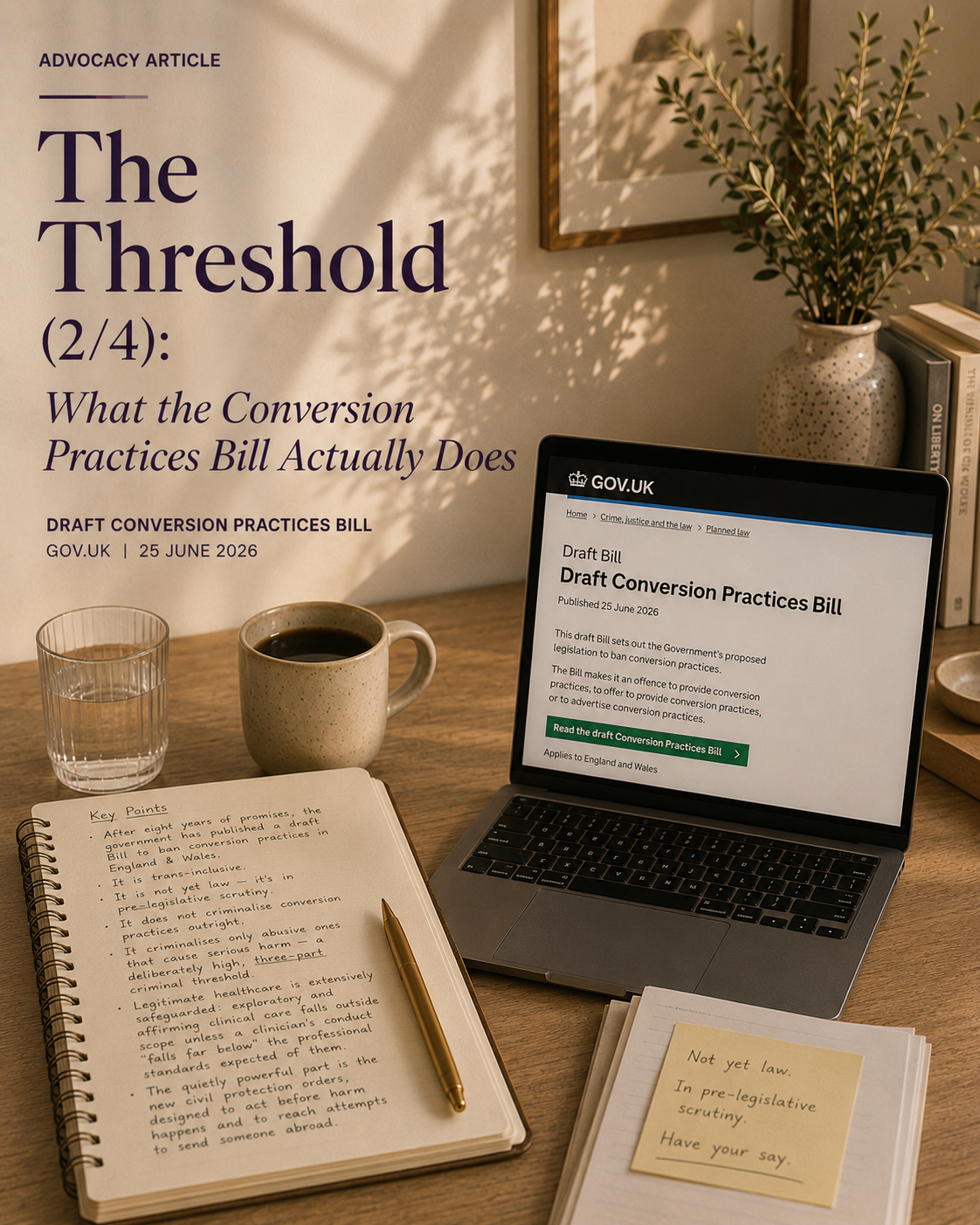
What the Conversion Practices Bill Actually Does
How the draft offence works, what is safeguarded, and why the criminal threshold is deliberately high.
Read essay →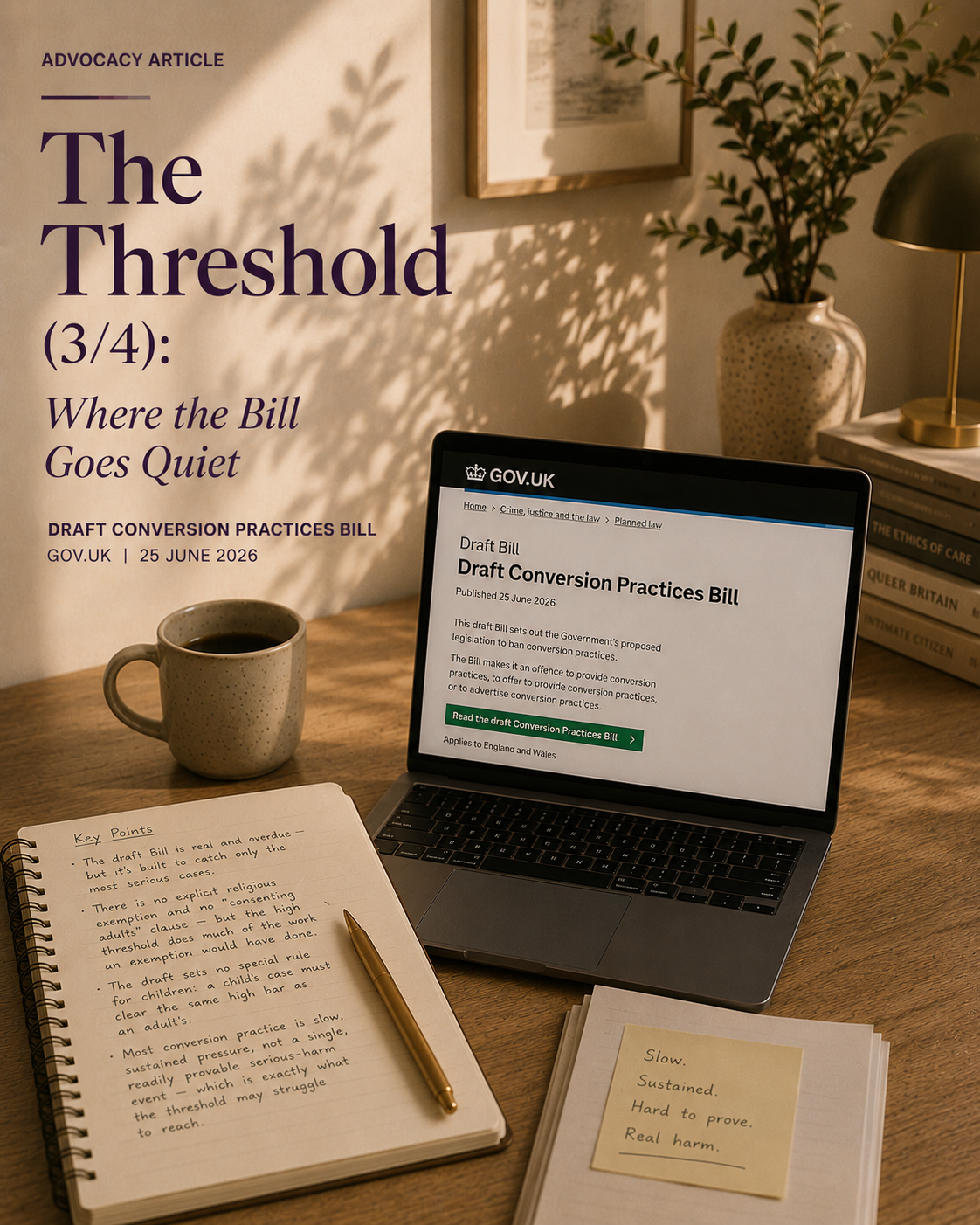
Where the Bill Goes Quiet
The analytical centre of the briefing: consent, children, religious settings, and the serious-harm threshold.
Read essay →
Only If It’s Bad Enough
A personal reflection on what a high threshold may miss, and why naming still matters.
Read essay →A threshold of “serious harm” measures the bruise.
It does not measure the mechanism.
The Threshold does not argue that the Draft Bill lacks value. It recognises that the Bill is trans-inclusive, that it safeguards legitimate healthcare, and that its civil protection orders may provide meaningful early intervention.
Its central argument is narrower: if conversion practices are most often experienced as slow, sustained attempts to reshape how a person understands themselves, can legislation built around abusive conduct causing serious harm consistently recognise those experiences?
That is the question the briefing leaves with Parliament.
This briefing draws upon legislation, explanatory materials, professional guidance, published survivor research, primary source material and lived experience. Full references and inline citations appear throughout the individual essays.
- Draft Conversion Practices Bill, GOV.UK, 25 June 2026.
- Draft Conversion Practices Bill: Explanatory Notes, GOV.UK, 25 June 2026.
- GOV.UK news release, “Government pushes forward with conversion practices ban to protect LGBT+ people from abuse,” 25 June 2026.
- Memorandum of Understanding on Conversion Therapy in the UK, first published 2015 and extended to gender identity in 2017.
- Galop, “There was nothing to fix: LGBT+ survivors’ experiences of conversion practices.”
- World Psychiatric Association, position statement on conversion therapy and sexual orientation.